Southwest Florida has built one of the most layered arts-in-healthcare landscapes in the state, yet the full picture is scattered across hospital websites, hospice brochures, and theater press releases that rarely speak to each other. Lee Health runs a gallery network spanning seven-plus locations. NCH and The Naples Players launched a formal bedside-arts collaboration in 2025. Avow Hospice and HOPE Healthcare both embed art and music therapy into standard end-of-life care. And the clinical research supporting all of it has grown considerably stronger since the 1980s. This article maps every named program - what it does, who it serves, and how artists, volunteers, and patients can connect with it.
Four distinct things arts in healthcare can mean
The phrase covers a wide range, and collapsing the categories creates confusion for everyone - artists wondering how to participate, patients wondering what to expect, and funders trying to evaluate impact.
| Category | Who delivers it | Clinical credential required | Primary goal |
|---|---|---|---|
| Decorative hospital art | Curators, galleries, local artists | No | Calming environment, wayfinding, cultural identity |
| Volunteer creative programs | Trained volunteers, community organizations | No | Engagement, distraction, emotional support |
| Clinical art therapy | Board-certified art therapists (ATR-BC) | Yes - national board certification | Diagnosis, treatment, psychological intervention |
| Performing arts interventions | Musicians, actors, storytellers with program training | No, but structured protocols required | Mood, communication, social connection |
Southwest Florida now has active examples of all four. That is unusual. Most mid-size metro areas have one or two. The region's large and older permanent population - concentrated in Lee and Collier counties - has driven demand, particularly in hospice and palliative settings. The presence of strong institutional partners, Lee Health and NCH on the hospital side and The Naples Players on the performing arts side, has given individual programs the organizational backing to survive beyond a single grant cycle.
Lee Health's Arts in Healthcare program
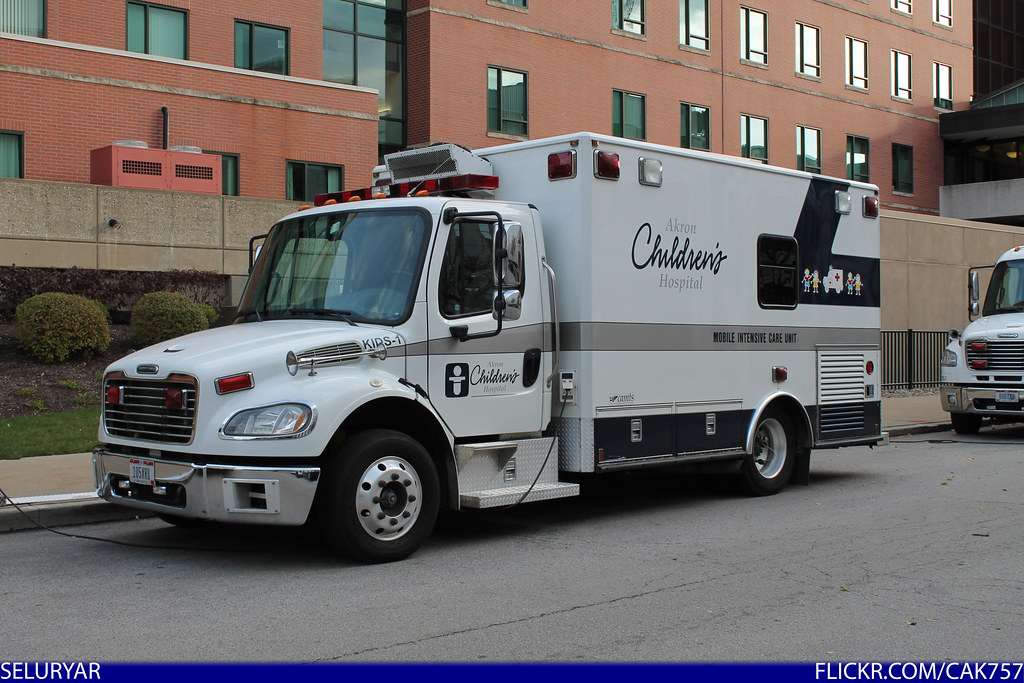
Lee Health runs arts programming across five hospital campuses: Cape Coral Hospital, Gulf Coast Medical Center, Lee Memorial Hospital, HealthPark Medical Center, and Golisano Children's Hospital of Southwest Florida. The program is not a single department but a network of overlapping initiatives - gallery displays, volunteer art carts, an annual contest, and a long-running disability arts gallery - coordinated under the system's Arts in Healthcare umbrella.
For artists who want to show work in a healthcare setting, Lee Health is the most structured entry point in the region. The system accepts submissions, maintains curated spaces, and runs programs that move art directly to patients who cannot come to the galleries themselves.
ART BY THE disABLED: a gallery network with no equivalent in the state
The ART BY THE disABLED program displays and sells original work by artists with disabilities at more than seven locations across the Lee Health system and beyond. The gallery sites include all four main hospitals, the Riverwalk Rehabilitation Center, the Cardiology Center on Bass Road in Fort Myers, and the Sanibel-Captiva Trust Company on Sanibel island.
This is one of the largest disability-arts gallery networks operated by a hospital system anywhere in Florida, and it has almost no web presence that explains how it actually works. What artists with disabilities should know:
- The program is specifically for artists who have a disability - physical, cognitive, or developmental.
- Work is displayed in public-facing areas of healthcare facilities, reaching patients, families, and staff daily.
- Original works are sold through the gallery locations, not just displayed.
- The program splits proceeds between the artist and the Arts in Healthcare program - contact Lee Health's Arts in Healthcare coordinator directly for current split terms and submission guidelines, as these details are not published online.
For artists who qualify, this network offers something most regional galleries do not: consistent, long-term display in high-traffic locations with a built-in audience that is often emotionally receptive in ways that gallery visitors rarely are. A patient waiting for a cardiology appointment, or a family member sitting in a hospital corridor, brings a different quality of attention to art on the wall.
HEARTS volunteers, the art cart, and the calendar contest
The day-to-day creative life of Lee Health's hospitals runs partly on volunteer energy. The HEARTS group meets the second Friday of every month, from 9:30 to 11 a.m., to make crafts together. Those crafts are then loaded onto art carts and taken directly to patients at bedside - a form of delivery that matters enormously, because many hospital patients cannot walk to a common area or a gallery space.
The bedside visit is not just about the object. It is about the conversation, the interruption of a long and anxious day, the moment when someone brings color and handmade texture into a room that otherwise contains only medical equipment. For volunteers, the HEARTS program is one of the most direct ways to contribute to patient wellbeing without clinical training.
The annual Lee Health calendar contest operates on a different principle. It invites artists system-wide to submit work, and the grand-prize winner receives a permanent display of their artwork on the fifth floor of the Rehabilitation Hospital at Lee Memorial. Permanent display in a working rehabilitation hospital means the work is seen continuously by patients who are often in long, difficult recovery processes - a meaningful form of patronage that most regional contests do not offer.
Golisano Children's Hospital and the Child Artist Program
The Child Artist Program at Golisano Children's Hospital began in 2006 and has run every year since. The concept is straightforward: a young patient creates a one-of-a-kind work, that work is auctioned at the Southwest Florida Wine and Food Fest Grand Tasting, and the proceeds go directly to the hospital. Over roughly two decades the program has raised substantial funds - check Golisano Children's Hospital's official communications for the current fundraising total, as the figure updates annually.
The program matters beyond the money. The child who creates the auction piece is a patient - someone in the middle of a difficult medical experience - and the act of making something that hundreds of adults will then bid on with real money is a form of agency that illness tends to strip away. The work also enters the hospital's permanent display, so the artist's contribution outlasts the auction event itself.
For the Wine and Food Fest community, it is worth knowing this is one of the most direct connections between the region's social fundraising circuit and its hospital arts infrastructure. The Child Artist Program is not a side event; it is a named program with nearly twenty years of continuity.
NCH and The Naples Players: ArtRX and clinical theater training
In 2025, NCH Healthcare System and The Naples Players launched ArtRX, a formal collaboration bringing bedside concerts, painting projects, and storytelling directly into patient rooms at multiple NCH campuses. The program is led by Summer Pliskow, The Naples Players' director of arts access, and Jennifer Hart, NCH's chief culture officer. The program's first public performance, an original work titled 'Healing Voices', premiered on October 18, 2026.
ArtRX brings performing and visual artists into clinical spaces in a structured, protocol-driven way - not as informal visits, but as a coordinated program with institutional support from both a major hospital system and an established regional theater company. What the theater and arts press has not addressed is what this means for working artists in the region. It creates a new category of paid and volunteer engagement for musicians, storytellers, and visual artists who want to connect their practice to healthcare settings. The Naples Players are the organizing partner, so artists interested in participating should start there.
Clinical staff training through theater
The NCH partnership with The Naples Players goes beyond bedside performance. The two organizations also work together at NCH's Judith and Marvin Herb Family Simulation Center, where Naples Players members run role-play and scenario-based acting sessions to train clinical staff in communication, empathy, and teamwork.
This is an unusual application of theater practice that no arts publication has yet covered: actors playing patients, family members, or colleagues in high-stakes scenarios so that nurses, doctors, and care coordinators can rehearse difficult conversations in a controlled environment. For theater practitioners, it represents a form of work that is purposeful and rarely publicized in arts circles. The simulation center model is growing nationally. Southwest Florida now has a named, active example of it, and local performers should know the opportunity exists.
Art therapy as a clinical discipline: how to find it in Southwest Florida
Art therapy is not art class. The distinction matters legally and practically. A board-certified art therapist holds a master's degree in art therapy, has completed supervised clinical hours, and has passed the national credentialing exam administered by the Art Therapy Credentials Board. The credential is ATR-BC. Without it, a practitioner can offer art instruction or creative workshops - which have real value - but cannot provide clinical diagnosis or treatment within a therapeutic relationship.
Clinical art therapy services are available in Lee County. The conditions typically addressed include:
- Trauma and post-traumatic stress disorder
- ADHD and attention-related challenges
- Autism spectrum presentations
- Anxiety and depression
- Grief and bereavement
Sessions are available in individual, family, and group formats. Insurance coverage and fees vary by provider - ask any prospective art therapist directly about current rates and accepted insurance before making an appointment. To find a verified practitioner:
- Search the Art Therapy Credentials Board's online directory at atcb.org - it lists verified ATR-BC holders by location.
- Search the American Art Therapy Association's therapist locator at arttherapy.org for additional verified practitioners.
- Confirm the credential directly - ask any prospective therapist for their ATR-BC number and check it against the ATCB database before beginning treatment.
- Ask about specialization - an art therapist who primarily works with children may not be the right match for adult trauma, and vice versa.
For anyone in the region considering a career move into creative-arts healthcare work, Florida Gulf Coast University offers an American Music Therapy Association-approved Music Therapy Equivalency Certificate Program - the most structured training pathway for this field available locally. It is designed for people who already hold a bachelor's degree in music and want to meet the academic and clinical requirements for board certification in music therapy. The program carries significant credit and internship requirements; check FGCU's current catalog for the exact figures and prerequisites, as these can change. Most musicians and music educators in Southwest Florida do not know this option exists.
Hospice arts: Avow and HOPE Healthcare
The hospice sector is where arts in healthcare gets the least public attention and does some of its most significant work. Two major hospice providers in Southwest Florida include arts therapies as standard, not optional, parts of their care.
Avow Hospice, now serving both Collier and Lee counties, includes art therapy, music therapy, Reiki, and massage among its standard complementary care options. HOPE Healthcare, founded in 1979 and based in Fort Myers, explicitly lists art, music, and massage therapies alongside conventional hospice and palliative care services. What both programs make available to enrolled patients and their families:
- Art therapy sessions that help patients express what is difficult or impossible to say in words
- Music therapy for pain management, emotional processing, and - in some cases - facilitating meaningful communication near the end of life
- Massage and touch therapies that address physical comfort and human connection simultaneously
- These services as part of enrolled hospice care - confirm current coverage with the provider at the time of enrollment
For the region's arts community, Avow and HOPE represent ongoing opportunities for musicians and visual artists to contribute their skills in a clinical context. Both organizations work with trained volunteers and contracted practitioners. Artists interested in this work should contact each organization's volunteer or complementary care coordinators directly.
Southwest Florida's large and growing older population means that hospice and palliative arts programs serve more people here than in most comparable metro areas. This is not a footnote to the regional arts story. It is a substantial part of it, and it is almost entirely absent from local arts coverage.
What the clinical research actually says
The case for arts in healthcare rests on several decades of controlled research, not anecdote.
The foundational study came from Roger Ulrich in 1984. Ulrich examined post-surgical patients - some with a window view of trees, some facing a brick wall - and found measurable differences in outcomes. Patients with the tree view had shorter hospital stays, required less pain medication, and experienced fewer post-operative complications. The study was not about art programs; it was about passive visual environment. Its implication - that what patients see affects how they heal - became the starting point for systematic research on arts in clinical settings.
Integrating visual and performing arts into healthcare settings reduced drug consumption, shortened lengths of stay, and improved staff job satisfaction. Journal of the Royal Society of Medicine, 2010 review
A scoping review published in PLOS ONE added more specificity: viewing visual artwork in clinical settings reduced heart rates and improved reported mental health outcomes for patients, staff, and visitors alike. Nature-themed representational art showed the strongest effect for anxiety and stress - a finding with practical implications for hospital curators choosing what to hang and where. The Foundation for Hospital Art's national registry, which includes Peace River Regional Medical Center in Port Charlotte and Physicians Regional Healthcare System in Naples, operates on exactly this principle: donating original works to hospitals precisely because the evidence supports the investment.
The research does not support the idea that any art in any context produces benefit. It supports specific claims: that visual environments matter to physiological and psychological outcomes, that performing arts interventions can reduce anxiety and pain medication use, and that staff who work in settings with active arts programs report higher job satisfaction. These are the claims that programs like ArtRX and Lee Health's gallery network can legitimately make on behalf of their work - and they are grounded in peer-reviewed evidence, not institutional enthusiasm.
Frequently Asked Questions
How can a local artist submit work to Lee Health's ART BY THE disABLED galleries?
The program is for artists who have a disability, and original works are displayed and sold across seven-plus locations within the Lee Health system. There is no public online submission portal as of this writing. Contact Lee Health's Arts in Healthcare coordinator through the Lee Health system website - look under Arts in Healthcare or community programs - for current submission guidelines and information about how sale proceeds are divided between artist and program.
What is ArtRX and how is it different from a standard hospital music program?
ArtRX is a formal partnership between NCH Healthcare System and The Naples Players, launched in 2025, that brings bedside concerts, painting, and storytelling into patient rooms at NCH campuses. It is distinct because it involves a named professional theater organization as an institutional co-partner, not just individual volunteers, and it also includes a clinical staff training component through the NCH simulation center. Artists interested in participating should contact The Naples Players directly.
Does art therapy require a referral from a doctor?
In most outpatient settings, a physician referral is not required to begin art therapy - a patient or family member can contact a board-certified art therapist (ATR-BC) directly. Insurance reimbursement may require a referral, however, so confirm that with both the specific therapist and your insurance provider before the first session.
Are the arts programs at Avow and HOPE Hospice available to family members, not just patients?
Both Avow and HOPE offer complementary therapies including art and music therapy as part of enrolled hospice care, and hospice care by definition involves the patient's family in the care plan. Ask each organization's care coordinator directly about how family members can access or participate in arts programming - availability varies by site and care setting.
Can someone without a music or art degree volunteer in healthcare arts programs in Southwest Florida?
Yes - the HEARTS volunteer program at Lee Health and the ArtRX program through The Naples Players both involve volunteers who do not hold clinical credentials. HEARTS focuses on craft-making and art cart delivery to patients; ArtRX involves performance and storytelling. Each program has its own training and screening process. Contact Lee Health's volunteer services or The Naples Players directly for current volunteer requirements.
What is the FGCU Music Therapy Equivalency Certificate and who is it for?
It is an American Music Therapy Association-approved program at Florida Gulf Coast University for people who already hold a music degree and want to qualify for board certification in music therapy - specifically the MT-BC credential administered by the Certification Board for Music Therapists. It is not an entry-level music degree. Check FGCU's current catalog for credit requirements and prerequisites, and verify current MT-BC certification requirements at cbmt.org before enrolling.