Southwest Florida is better known for its beaches than its arts infrastructure, but the region supports a genuine glass art ecosystem - one that runs from participatory studio sessions to a museum collection that would anchor any major American city. That ecosystem spans three distinct disciplines, several active studios, dealer galleries, and a recent museum donation that placed Naples on the national studio glass map. What follows maps all of it, from the furnace to the gallery wall.
The Three Disciplines: Hot, Warm, and Cold Glass
Before booking a session or starting to shop, it helps to know that "glass art" covers techniques with almost nothing in common except the raw material. The three major categories differ in temperature, equipment, physical process, and the kind of work they produce.
Hot glass - what most people picture - means working with molten material at around 2,000°F. The gather, a blob pulled from the furnace on a steel blowpipe, must be kept rotating continuously; the moment rotation stops, gravity wins and the piece droops. A single session produces one object. The equipment is substantial: a gas furnace, a glory hole for reheating, and an annealing oven for controlled cooling.
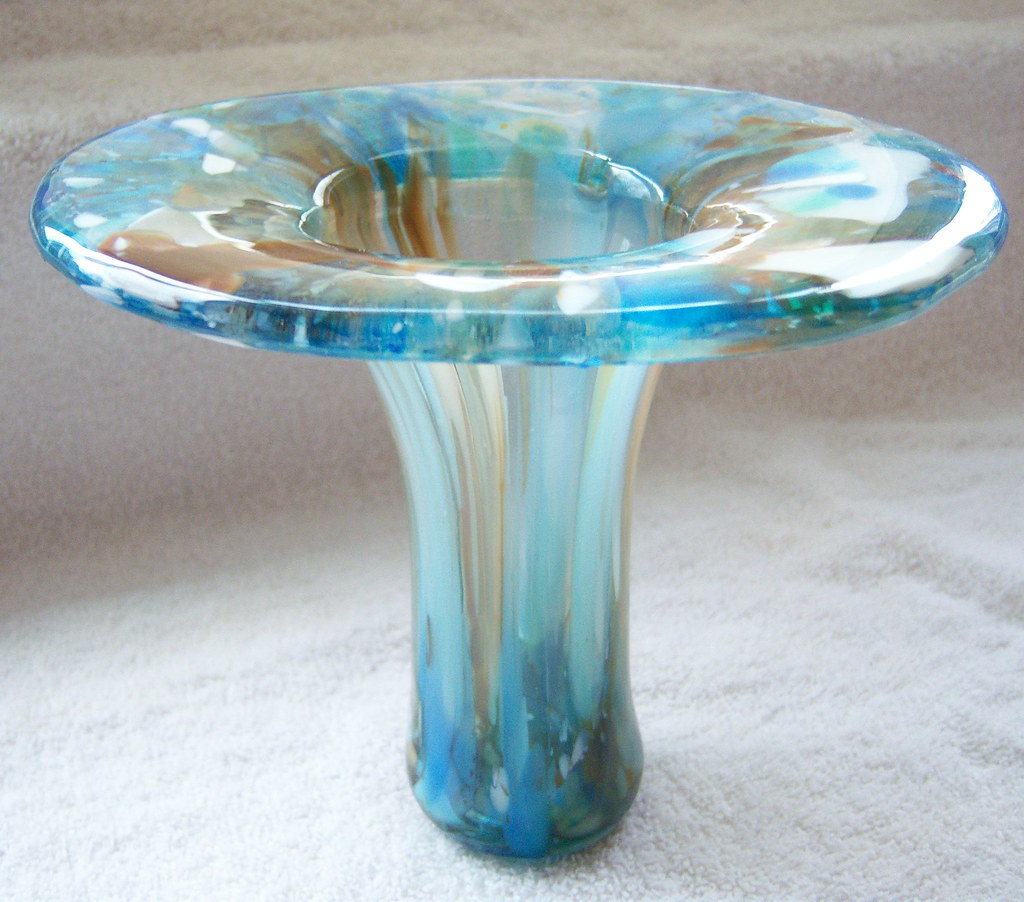
Warm glass, or kiln-forming, works at lower temperatures - roughly 1,400°F to 1,500°F. The artist arranges cut glass on a mold, then fires it in a kiln until pieces fuse together. No blowpipe, no gather, no rotation. Fusing and mosaic work fall here. The results can be flat panels, shallow bowls, or layered pieces with strong color and texture from the cut pieces used.
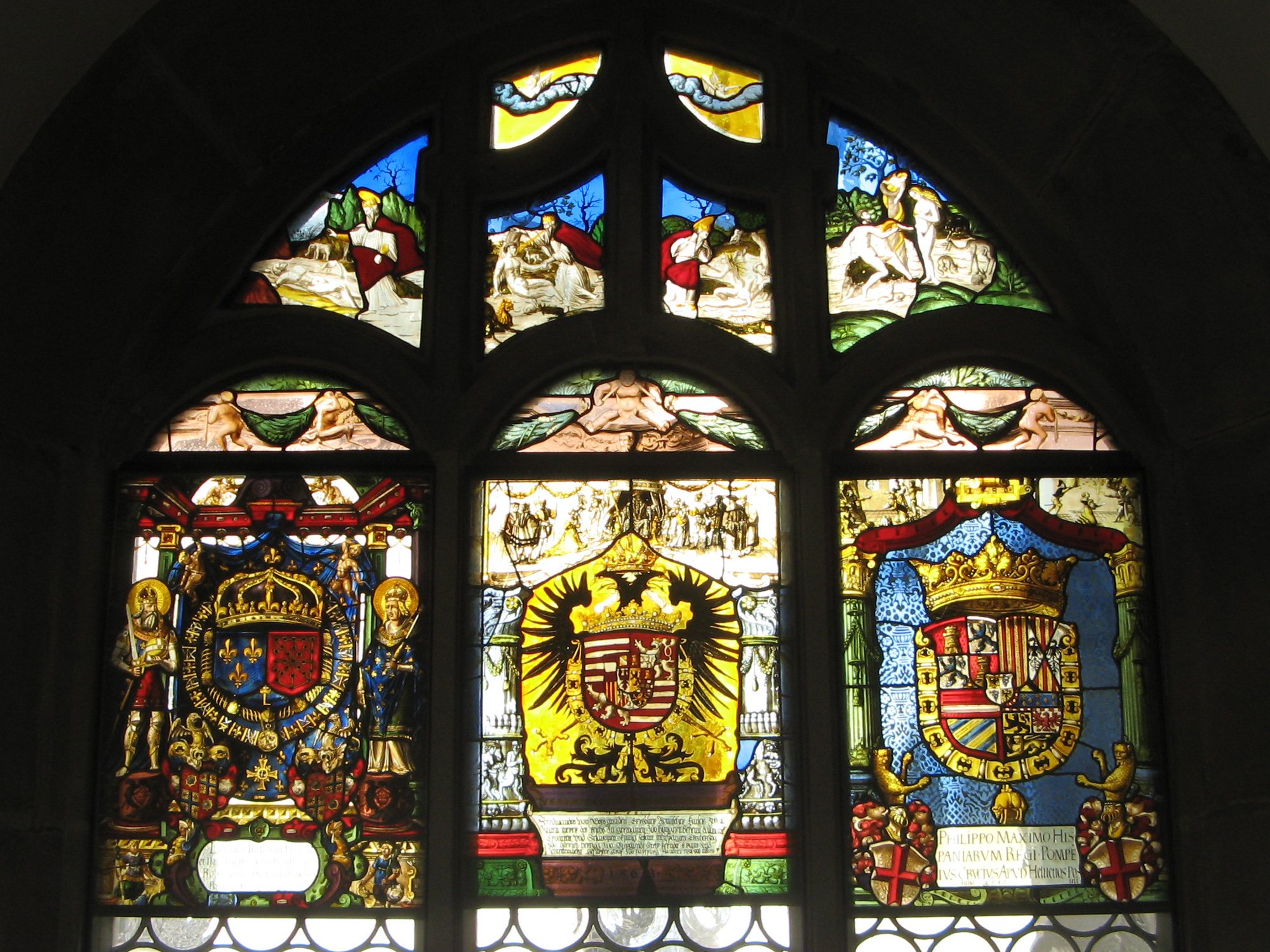
Cold glass requires no heat to shape. Stained glass involves cutting pieces, applying vitreous pigments, and assembling them with lead came or copper foil. Etching cuts surface designs with abrasive or acid. Restoration of historic windows falls here too. The skill demands are different from the other categories - more about draftsmanship, cutting precision, and architectural knowledge than about manipulating molten material under time pressure.
| Discipline | Process | SWFL Venue | Participatory Sessions |
|---|---|---|---|
| Hot glass (blowing) | Molten gather, continuous rotation, breath and tools | Glassblowing in the Garden | Yes - small groups, book ahead |
| Warm glass (fusing/kiln) | Cut glass arranged and fired in kiln | Naples Glassworks | Yes - Sunday, Monday, and Thursday, mid-morning to mid-afternoon; seasonal - verify schedule directly |
| Cold glass (stained/etched) | Cut, paint, lead came, copper foil - no forming heat | Apperlo Art; Art & Glass Works | No - commission and restoration only |
| All three processes | Flame-worked, blown, and cast represented | Baker Museum (Sibrack Collection) | No - museum exhibition |
Glassblowing in the Garden: A Naples Studio with a Seattle Pedigree
Conrad Williams grew up in Naples and left for the Pacific Northwest - returning with credentials that connect his backyard studio directly to the origins of the American studio glass movement. He arranged a semester-long glassblowing internship for credit while still in high school, which set his direction. After completing his college studies, he trained with Dale Chihuly, Benjamin Moore, and Richard Royal, earning internships at their Seattle studios. All three are central figures in the Pacific Northwest lineage that grew from the Pilchuck Glass School, which Chihuly co-founded in Washington State in 1971 and which is most credited with launching studio glass as a recognized American art form. Williams has been making glass since 1998.
In 2012, he established Glassblowing in the Garden in a tropical backyard near Lowdermilk Park in Naples. The studio runs on solar power and operates as an indoor-outdoor space - the surrounding landscape is part of the experience in a way that few glass studios anywhere can claim. Sessions accommodate one to four participants. Larger works produced there find their way into private collections across the country.
What a Session Involves
A session here is not a passive demonstration. Participants work alongside Williams at the furnace, gathering molten glass, learning to keep it rotating, and shaping it under instruction. The physical reality - the heat, the weight of the gather on the pipe, the speed at which decisions must be made before the glass cools - is the point. You leave with a piece you made.
Warm Glass: Naples Glassworks and the Fusing Tradition
Naples Glassworks focuses exclusively on warm-glass techniques - fused glass and mosaics rather than blowing. The studio's seasonal calendar runs October through May, with open studio hours on Sunday, Monday, and Thursday - running from mid-morning through mid-afternoon. Verify the exact times directly with the studio before planning a visit, as seasonal schedules can shift. This is a different kind of experience from a glassblowing session: more deliberate in pace, more forgiving for first-time participants, and accessible to people who want to work with glass without a furnace in the room.
Fusing rewards patience and an eye for color. The artist makes decisions about which cut pieces to combine, how to arrange them on a mold, and what the kiln will do to the layers. The outcome is not fully predictable - the firing process introduces effects the artist plans for but does not entirely control. That uncertainty is part of what makes the technique interesting to work in and to watch.
If you are planning a visit around a class or open session, check the studio's current schedule directly rather than assuming the calendar above has not shifted. Seasonal businesses in Southwest Florida adjust hours based on demand, and the difference between an October opening and a May closing can be subtle year to year.
Architectural and Liturgical Glass: Commission Work at Scale
The cold-glass tradition in Southwest Florida is represented by two studios doing serious commissioned work. Neither runs participatory sessions, but both produce work that shapes the built environment at a scale no other glass discipline reaches.
Apperlo Art
Mila Apperlo and Stevan Stanisic describe themselves as fourth-generation European artists, and their firm, Apperlo Art, works in stained glass and mosaic fabrication and restoration. Their client list spans private homes, businesses, and places of worship across multiple continents. Restoration demands a particular expertise - matching original glass types, understanding historical leading techniques, and integrating new sections invisibly with century-old material. Apperlo Art handles both new commissions and existing work that needs repair or conservation.
Art & Glass Works in Fort Myers
Art & Glass Works, owned by Barbara L. Burlingame in Fort Myers, brings more than four decades of experience to custom architectural glass. Every design in the studio is hand-drawn - no stencils, no templates. Each piece is custom to the specific architectural setting it will occupy: the proportions, light conditions, and surrounding materials all shape the design from the first sketch. Forty-plus years in the same discipline produces institutional knowledge that is difficult to replicate, and the refusal to use stencils keeps each commission genuinely singular.
Work from both studios ends up in entryways, sanctuary windows, and interior architectural features throughout Southwest Florida and well beyond the region. You engage them through a commission process rather than browsing a gallery - but their work is visible throughout the area once you know to look for it.
Glass in the Dealer Galleries and Open Studios
For collectors who want to buy finished studio glass rather than commission it, Southwest Florida has two main entry points.
East West Fine Art, founded in 2000 and among the largest galleries in the region, carries art glass alongside painting and sculpture at its Naples location on Vanderbilt Beach Road. The inventory rotates, and glass is not always the primary focus, but the gallery's scale means the selection tends to be serious when it is present. Check what is currently on the floor before making a special trip for glass specifically.
The Naples Art District open studios run primarily from November through April, with weekly events every Thursday and Saturday from 1 to 5 p.m. The district also holds a limited number of open studio dates during the summer months - check the current calendar at naplesartdistrict.com before planning a visit outside the main season. More than 100 working artists participate, with studios on Shirley Street, J&C Boulevard, and Yahl Street. Glass and mosaic artists are among them. The open studio format is one of the better ways to buy directly from a maker - you see the work in the space where it was made, can ask about process and materials, and prices tend to reflect a direct relationship rather than gallery markup.
- East West Fine Art on Vanderbilt Beach Road - gallery-format sales, year-round presence, rotating glass inventory
- Naples Art District open studios - direct from maker, primarily November through April (plus limited summer dates), Thursday and Saturday afternoons only during the main season
- Glassblowing in the Garden - larger collected works available by inquiry with Williams directly
- Baker Museum at Artis-Naples - context for what serious SWFL collecting looks like, with the Sibrack exhibition as a reference point
The Baker Museum's Sibrack Collection: What Thirty Years of Serious Collecting Looks Like
In 2025, Naples-based collectors Dr. Laurence and Rita Sibrack donated their collection of studio glass and ceramics to the Baker Museum at Artis-Naples. The collection had been assembled over roughly 30 years. The donation moved a body of work built quietly in Naples into a permanent institutional home where it will be available to researchers, educators, and the public for the long term.
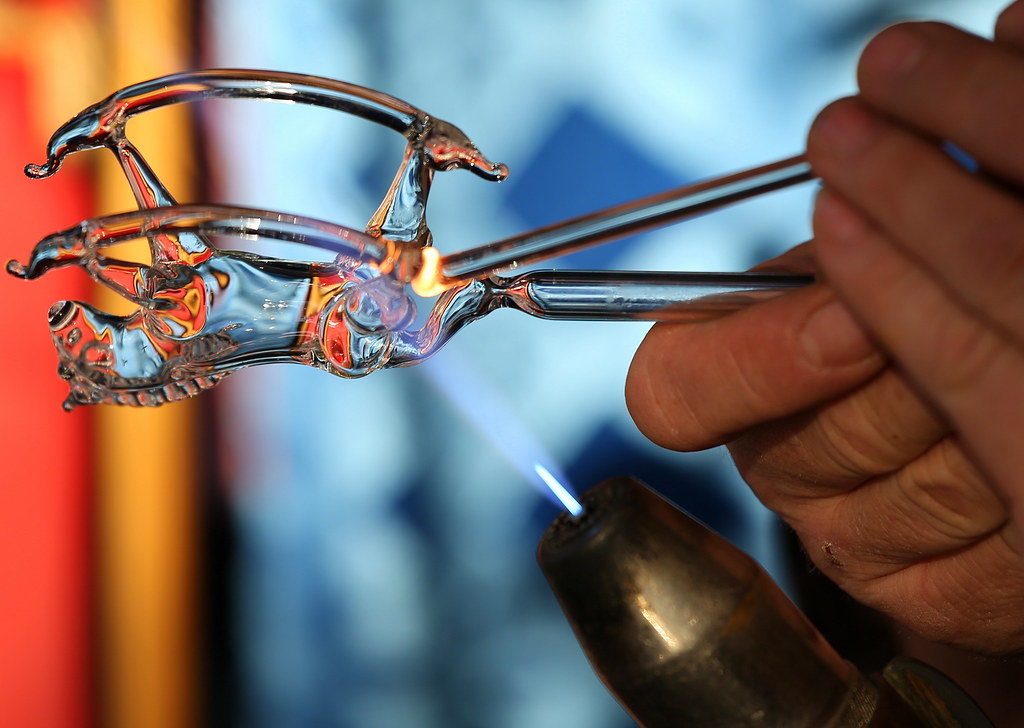
The numbers matter. The Sibrack Collection comprises 74 works by 60 artists, representing every major glass-making process - flame-worked, blown, and cast. The artist roster reads as a survey of the American and international studio glass movement:
- Dale Chihuly - the central figure of the Pilchuck lineage, represented at the Baker Museum and through Williams's direct training in Naples
- Preston Singletary - known for fusing Tlingit visual traditions with blown glass technique
- Judith Schaechter - a leading figure in contemporary stained glass as fine art rather than architectural craft
- Amber Cowan - known for flame-worked pieces using vintage American pressed glass as source material
- Lucio Bubacco - Venetian artist working in the lampworking tradition with figurative complexity
- Dan Dailey - a significant figure in functional and sculptural studio glass across four decades
- Michael Glancy - known for blown and coldworked glass combined with electroformed copper and metal surfaces, pushing surface complexity and the dialogue between glass and metal
The exhibition 'The Passion of Collecting: Stories in Glass and Ceramics from the Sibrack Collection' opened at the Baker Museum on January 10, 2026, installed on the second floor, and remains on view through fall 2026. It is the most concentrated presentation of serious studio glass in Southwest Florida and one of the more significant museum donations of this kind in Florida's history.
Private collectors who donate intact collections to institutions make something possible that dispersal at auction cannot: works held in relationship to each other, available for curatorial argument, and open to researchers and the public over the long term. The Sibrack donation achieves that. A collection that arrives whole can be studied as a body of thought; one sold piecemeal disappears into provenance chains and never reassembles.
What It Means to Collect Studio Glass
Studio glass sits in an interesting position in the art market. Most pieces are one-of-a-kind or produced in very small editions. Unlike painting, the process leaves physical evidence in the object itself - the pontil mark on the base of a blown work, a kiln number stamped on a fused piece, a signature scratched into the surface - that tells a knowledgeable buyer something about how and when the work was made.
Provenance Questions Worth Asking
Before buying a significant studio glass piece, work through these in order:
- Is the piece signed, and where? Signatures on glass are typically diamond-scribed or sandblasted into the surface, usually the base.
- Is there documentation - gallery receipt, certificate of authenticity, or correspondence - connecting this piece to the artist by name and date?
- If listed as part of an edition, what is the edition size, and what number is this specific piece?
- For kiln-formed work, is the kiln number recorded? This helps authenticate and date the piece independently of the signature.
- What is the exhibition or collection history? Work that has been shown publicly or held in named collections carries verifiable provenance that private-sale pieces often lack.
The Sibrack Collection, now at the Baker Museum, is a useful reference for SWFL collectors. The works came with the kind of provenance - documentation, direct purchases from galleries and artists, 30 years of careful stewardship - that serious collecting requires. Seeing what a well-documented collection looks like is its own form of education before you start building one of your own.
Planning Around the Season
Southwest Florida's art market is shaped by a hard seasonal reality. The November-through-April window is when the population is highest, galleries run their strongest programming, and studios are most reliably open. Outside that window, some studios close, galleries reduce hours, and open studio events move to a reduced schedule. The schedule below consolidates current hours for each venue; verify directly before visiting, as seasonal businesses adjust without notice.
- Glassblowing in the Garden - by appointment; contact Williams to confirm availability before planning around a session
- Naples Glassworks - October through May, Sunday, Monday, and Thursday; mid-morning to mid-afternoon; closed in summer - verify times directly
- Apperlo Art - commission-based, not tied to seasonal hours the same way; contact for project inquiries
- Art & Glass Works, Fort Myers - established studio; confirm current hours directly
- East West Fine Art - year-round gallery; glass availability varies by current inventory
- Naples Art District open studios - weekly November through April, Thursday and Saturday from 1 to 5 p.m.; limited summer dates also occur - verify the current schedule at naplesartdistrict.com
- Baker Museum Sibrack Collection - on view through fall 2026; check Artis-Naples for current museum hours
The most direct practical advice: if you are visiting specifically for glass - to take a session, shop in open studios, or see the Sibrack exhibition - plan the trip between November and April and contact your primary destination in advance. The season compresses a great deal of activity into a short window, and the best studio sessions fill up well ahead of the busiest weeks.