Southwest Florida is not the first place most people would name when listing American fine art photography centers. But the region has built something genuine over the past four decades - a photographic tradition rooted in the Everglades, supported by dedicated gallery spaces from Naples to Fort Myers, and anchored by artists whose credentials hold up in any serious art market. Visitors and collectors arriving here for the first time face a real challenge: the market mixes collectible gallery work with tourist-oriented prints, and knowing the difference matters before money changes hands.
What Fine Art Photography Means Here
The term gets used loosely. Portrait photographers, event photographers, and real estate photographers are all technically photographers. Fine art photography is a different category - defined not by subject matter but by intent, process, and market structure. A fine art photograph is made as a primary creative work, produced in a defined limited edition, printed to archival standards, and sold through gallery or direct-artist channels with documentation that establishes authenticity and edition position.
- Fine art photography: original creative work, limited edition, archival printing, gallery documentation
- Portrait and event photography: client-commissioned, not typically sold as editions
- Commercial photography: made for advertising, editorial assignment, or licensing
- Wall decor photography: printed for interior design use, often open edition with no artist documentation
Southwest Florida has developed its own identity in fine art photography because of geography. The Everglades, the Big Cypress Swamp, the coastal estuaries, the subtropical light - these are not generic backdrops. They reward long study. Photographers who settle here return to the same locations across seasons and years, and that sustained attention produces work with a specificity that separates it from travel photography. The flat, diffuse quality of subtropical light - especially in summer, especially at dusk - creates tonal conditions that photographers trained in northern landscapes have to learn from scratch. That light, and the visual traditions it has produced, is the connective tissue of the regional scene.
The distinction between fine art and decorative photography matters to collectors because it affects resale, provenance, and longevity. Decorative prints on open editions do not appreciate. Limited editions from artists with exhibition records and institutional relationships can, depending on the artist's trajectory.
Clyde Butcher and the Everglades Tradition
No single artist has done more to establish the Everglades as a serious photographic subject than Clyde Butcher. His story has both a personal and a technical dimension, and both explain why his work commands serious attention.
Origin and Subject
In 1986, Butcher's 17-year-old son Ted was killed by a drunk driver. To process the loss, he went alone into the Everglades with his camera. He had been working in color; after Ted's death, he switched entirely to black-and-white. That shift was not commercial calculation. It was grief finding its form - and what emerged was a body of work that treats the Everglades not as scenery but as interior landscape. The connection between maker and place is visible in the images, which is part of why they read differently from competent wildlife or nature photography.
The Large-Format Process
The technical dimension is inseparable from the visual result. Butcher uses large-format view cameras - in film sizes including 8x10 and formats larger still that most photographers never touch. The physics matter. A larger film plane captures more visual information per frame. When a print is made from a large-format negative and scaled to mural proportions, the detail holds. No digital interpolation, no artificial sharpening. A collector buying a large Butcher print is buying a photographic object that retains resolution at a scale that would reduce a 35mm or even medium-format image to visible grain and loss of edge definition.
His Venice, Florida studio contains a large working darkroom where he personally makes limited-edition silver gelatin prints - a wet chemical process that most commercial labs abandoned years ago. Silver gelatin on fiber-base paper, when properly processed and stored, has archival properties that rival any other photographic medium. The labor is real: mural-sized prints require precise chemistry, long exposure times, and physical handling that cannot be automated. That labor is part of what collectors are paying for, and it is also why his output is genuinely limited rather than artificially so.
His gallery sits on the Tamiami Trail in Ochopee, inside Big Cypress National Preserve, on property that also offers guided swamp-walk eco-tours and overnight lodging. The location is intentional - Butcher has been a conservation advocate throughout his career, and the gallery functions as both commercial space and argument for preservation. Visiting is worth the drive. Prints seen at full scale, in the landscape that produced them, read differently than reproductions suggest.
The Everglades is not just a landscape - it is a photographic subject that rewards long attention. Collectors who understand what large-format film captures understand why Butcher's prints hold at mural scale where others dissolve.
The New Gallery Presence on 5th Avenue South
Naples' 5th Avenue South corridor has long supported galleries representing painting and sculpture. In 2024, Australian photographer David Beavis opened a large gallery space there - his second location after his original Park City, Utah gallery, which he established in 2015.
Beavis brings a specific set of credentials. He has accumulated more than 100 international awards since 2011, including rankings as a top-ten fine art photographer and top-ten black-and-white photographer in the United States by the One Eyeland Awards. That is a competition-circuit credential, which functions differently from institutional exhibition history - but in a regional market that has sometimes valued nature subjects over formal art-world pedigree, his record establishes a measurable standard.
The gallery's arrival matters structurally. A dedicated photography gallery - rather than a mixed space with photographs alongside paintings and ceramics - signals market depth for photography as a standalone category. For collectors new to the medium, a focused context is useful: you're assessing photography on its own terms, not comparing it sideways to oil on canvas. The fact that this opened in 2024 reflects growing collector confidence in the medium regionally.
Wildlife and Nature Photography: The Regional Subject Matter
Dennis Goodman has worked the regional landscape for decades since relocating to Naples in 1985. Roseate spoonbills, ospreys, and burrowing owls appear repeatedly in his catalog - not as generic wildlife shots but as sustained subjects returned to across light conditions, seasons, and years. His downtown Naples gallery prints everything in-house across multiple substrates: canvas, metal, acrylic, and fine-art paper. Additional locations in Bonita Springs, Sanibel Island, and Islamorada extend reach across the region and into the Keys.
In-house printing matters to collectors because quality control stays with the artist rather than an outside lab. Substrate choices - whether a print goes on metal, acrylic, or archival paper - affect how it holds up over time and how it reads in different lighting environments.
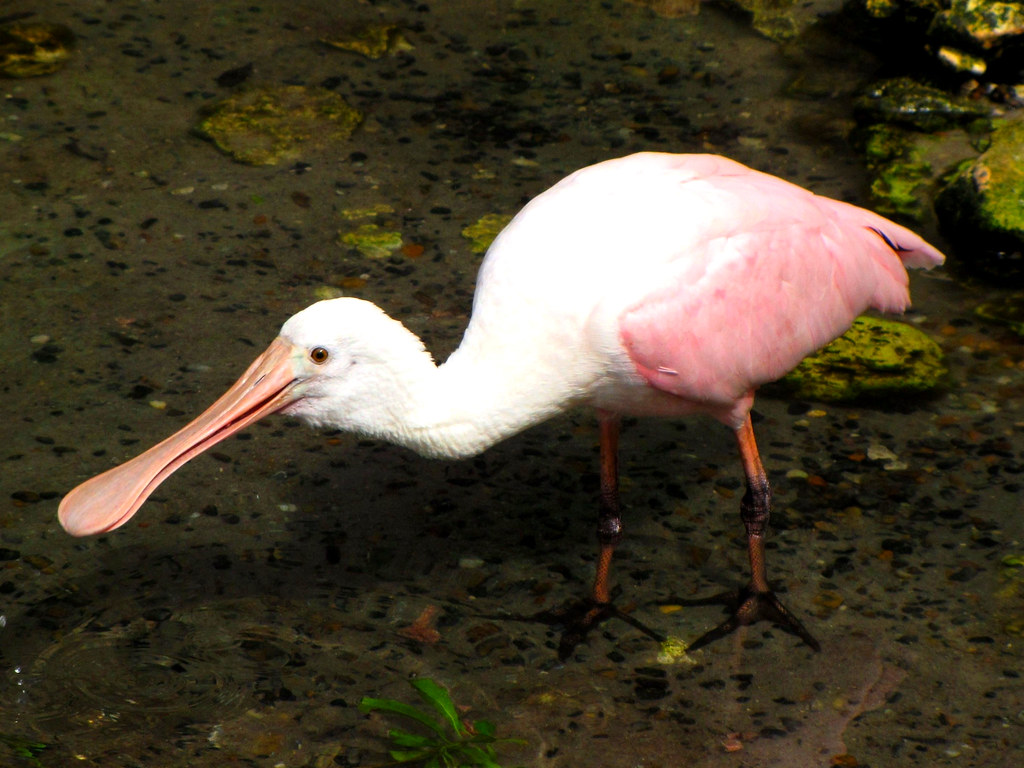
Coastal birds have become significant subjects in Southwest Florida fine art photography for reasons beyond visual appeal. The roseate spoonbill - shocking pink, ungainly in flight, spectacular in feeding behavior - photographs differently in subtropical morning light than any bird in a northern setting. The high humidity that softens shadows, the angle of sunrise over open water, the way colors saturate in the hour before storm - these are conditions photographers train for and collectors come to recognize as distinctly of this place.
Pinhole, Film, and Conceptual Approaches
Not every photographer working in Southwest Florida is pointing a lens at a spoonbill. Beth Everhart represents a different tradition - rooted in the formal art world rather than the landscape photography market.
Everhart holds an MFA from Hunter College in New York City, received a residency at Yaddo in Saratoga Springs, and has been awarded a Brooklyn Arts Council grant. Her photographs are made with vintage box-style and pinhole cameras, printed large-scale in black-and-white. Pinhole photography uses a tiny aperture in place of a lens. The result is an image with a quality that is technically imprecise in ways that are deliberately expressive - long exposures, soft edges, a spatial compression that optical lenses cannot replicate.
These credentials carry specific weight in the art world. Yaddo is one of the oldest and most selective artist residencies in the United States. A Brooklyn Arts Council grant indicates peer review by working artists and curators. Her Juror's Choice Award at the All Florida Juried Exhibition means her work was assessed by an outside critic, not self-selected. Together, these markers signal that her photography belongs to a conversation happening in art centers far from Southwest Florida - and that she is bringing that conversation here.
For collectors, alternative-process work like Everhart's occupies a different market segment than landscape or wildlife photography. It attracts buyers who follow exhibition records and who are building collections with an eye toward an artist's institutional trajectory rather than regional subject appeal. It is not better or worse than a Butcher silver gelatin print. It is a different object, serving a different collecting logic.
The Editorial-to-Gallery Pipeline
Brian Tietz trained as a photojournalist, with work appearing in outlets including the Associated Press, Getty Images, USA Today, and the New York Times, before moving into commercial and editorial work. His images have run in Gulfshore Life and Gulfshore Business for close to two decades.
That background matters in ways that are not obvious. Photojournalism trains photographers to read a scene fast, find the frame inside a chaotic situation, and make technically clean images under pressure. When those skills get applied to fine art subjects - the Southwest Florida landscape, portraits, editorial coverage of regional life - the result is often more direct and less affected than work made in purely artistic contexts. There is an economy to the frame.
Publication history in Gulfshore Life functions in this region as a visible portfolio. The magazine has covered Southwest Florida arts and culture across many years, and photographers who appear in it repeatedly have demonstrated that their work holds up to editorial selection - a different but legitimate form of curation. For buyers who do not follow gallery openings, editorial recognition is often the first signal that a photographer's work has been externally validated.
Tonya Barnes works with dramatic studio lighting, a technique that separates her work from the naturalistic light of landscape and wildlife photography. Studio control means deliberate shadow placement, controlled color temperature, and a sculptural quality in subjects that outdoor photography rarely achieves. Her inclusion in the Sidney & Berne Davis Art Center's 'Exposed' exhibition alongside Everhart and Tietz makes the point that Southwest Florida's photography scene is not monolithic - it spans photojournalism-trained eyes, alternative-process makers, and studio control.
Where Photography Is Exhibited in the Region
The Sidney & Berne Davis Art Center in Fort Myers has been one of the most consistent exhibition venues for photography in the region. Its 'Exposed: The Art of Photography in SWFL' series brought together photographers with notably different practices under a single curatorial frame - Barnes's studio work, Everhart's alternative-process imagery, and Tietz's editorial-trained eye. That kind of grouping is useful for collectors trying to understand the range of what is being made here.
Artis-Naples runs the Student Photography Institute, which selects a cohort of high school students each year to study photography and produce finished work that is exhibited at The Baker Museum at Artis-Naples. Finished student work appearing at museum level - not in a school hallway - signals the region's commitment to treating photography as a serious art form from early stages. The program's instructor, Miami-based artist and educator Tony Chirinos, brings outside expertise to the program, which keeps it connected to wider contemporary practice.
The Baker Museum at Artis-Naples, which opened in 2000 as the first full-scale art museum in Southwest Florida, holds a permanent collection of over 4,000 objects and mounts rotating exhibitions alongside it. The Naples Art Institute has also demonstrated the regional audience's appetite for museum-quality photography programming, having hosted major shows such as 'The Power of Photography: Iconic Images from the Collection of Peter Fetterman.' When collectors regularly see master prints at museum scale, their expectations for gallery work rise accordingly. That dynamic benefits the market as a whole.
- Sidney & Berne Davis Art Center (Fort Myers) - 'Exposed' series, contemporary regional photographers across styles
- The Baker Museum at Artis-Naples - permanent collection, Artis-Naples Student Photography Institute exhibitions, rotating shows
- Naples Art Institute - education programming and major photography exhibitions
- Big Cypress Gallery (Ochopee) - Clyde Butcher's primary gallery, eco-tours, and lodging on preserve land
- Dennis Goodman Fine Art Photography - Naples, Bonita Springs, Sanibel, and Islamorada locations
- David Beavis Gallery (5th Avenue South, Naples) - opened 2024, dedicated fine art photography space
Buying Fine Art Photography: A Practical Guide for Collectors
Photography has a documentation problem that painting does not. A painting is singular - the object itself is the work. A photograph can be printed many times from the same file or negative, which is why edition size and documentation are critical in a way they simply are not for most other media.
Questions to Ask Before You Buy
Before buying any limited-edition photograph - in Southwest Florida or elsewhere - work through this sequence:
- Ask for the total edition size across all formats and sizes, not just the one in front of you. A photographer who prints the same image at five sizes with a separate run at each has made far more prints than the number on any single print suggests.
- Ask how many artist proofs exist. Artist proofs sit outside the numbered edition and can significantly expand the total number of prints in circulation.
- Confirm that a Certificate of Authenticity is included, with the edition number, total edition size, artist's signature, title, year, and printing medium clearly stated on the document.
- Verify that the paper or substrate is archival - acid-free fine-art paper for pigment prints, or ask specifically about paper type if the artist uses wet-process silver gelatin.
- Plan for UV-protective framing. Direct sunlight will fade any photographic print faster than anything else, regardless of medium.
Comparing Substrates
| Substrate | Archival Durability | UV Sensitivity | Best Display Context |
|---|---|---|---|
| Pigment on fine-art paper | Very high (rated for well over a century) | Moderate - needs UV glass or framing | Interior wall, controlled light |
| Metal (aluminum) | High - resists moisture and humidity | Lower surface sensitivity | Modern interiors, humid rooms |
| Acrylic face-mount | High - vibrant color, surface protected | Low - UV typically embedded in mount | Large-format, gallery presentation |
| Canvas | Moderate - prone to cracking over time | Higher sensitivity without varnish | Traditional interiors, smaller sizes |
| Silver gelatin (wet process) | Very high when properly processed | High - requires archival framing | Museum or serious collector display |
Archival pigment printing on acid-free fine-art paper, when stored away from UV light, is rated to last well over a century - a longevity claim that most oil paintings on canvas cannot match without professional conservation. That practical advantage is worth understanding when comparing photography to other media at similar price points.
How Photography Fits into the Southwest Florida Art Market
The Southwest Florida art market follows seasonal rhythms tied to the winter visitor population. October through April is high season - galleries open new exhibitions, outdoor art fairs fill the calendar, and serious collectors arrive from northern states and Europe. Summer is when photographers do field work rather than selling. That rhythm means the best time to see new editions and meet artists in person is winter.
Photography generally enters the market at lower price points than painting or sculpture of comparable gallery stature, which makes it an accessible starting point for new collectors. But this gap narrows quickly with artists who have strong institutional track records. Alternative-process work from a Yaddo-residency artist and a significant silver gelatin print from a conservation-recognized photographer carry price levels that reflect art-world positioning, not just medium preference.
- Outdoor art fairs in season include photography alongside other media - a practical way to see range and meet artists in one place
- Gallery openings (October through April) are where new editions typically launch and where artists are most accessible
- Direct studio purchases are possible with several regional photographers and often provide more documentation detail than secondary-market sources
- Museum-hosted exhibitions at the Baker Museum signal artists and bodies of work worth tracking before prices climb
Appreciation in this market follows the tier. Nature and wildlife photography from artists with strong local followings holds value within the regional collector base and among buyers who return seasonally. Work by artists with national institutional records - residencies, major juried exhibition wins, significant editorial history - can reach buyers outside the region, which expands the secondary market beyond Southwest Florida. The Baker Museum's exhibition programming and Artis-Naples's connections to educators like Chirinos are indicators that this scene is not isolated from wider art-world networks. That connectivity is what separates a regional photography market with long-term depth from one that rises and falls with seasonal foot traffic.
Frequently Asked Questions
Can I visit Clyde Butcher's Big Cypress Gallery in person?
Yes - the gallery is open to the public and sits within Big Cypress National Preserve on the Tamiami Trail in Ochopee. In addition to the prints on display, the property offers guided swamp-walk eco-tours and overnight lodging. Confirm current hours and tour availability directly with the gallery before making the drive, as schedules vary seasonally.
Why does Clyde Butcher use large-format cameras when digital cameras are so capable?
Large-format film captures more visual information per frame than even the highest-resolution digital sensors - the physical size of the negative is what determines how much detail holds when a print is scaled to mural proportions. When a Butcher print runs several feet wide, it draws from a negative large enough to support that resolution without interpolation or sharpening. That is a technical property of film size, and it is why large-format film remains the medium of choice for photographers making prints intended to be seen at significant scale.
What should a Certificate of Authenticity actually include?
At minimum: the artist's signature, the image title, the year the photograph was made, the edition number and total edition size, and the printing medium and substrate. A COA that omits total edition size or that only states the edition within one format - without disclosing whether the image exists in other sizes or runs - does not give you the information you need. Ask the gallery to clarify anything missing before purchase.
Is fine art photography a reasonable first purchase for a new collector in this region?
It is often a practical starting point precisely because photography enters the market at lower price points than painting or sculpture of comparable gallery standing. The more important factor is choosing work with proper documentation - edition size, COA, archival substrate - rather than work that merely looks appealing on a wall. Starting with a well-documented limited edition from a photographer with a verifiable exhibition record gives you an object with traceable provenance if you ever want to sell or donate it.
What is silver gelatin printing, and why does it matter at the gallery level?
Silver gelatin is a wet-chemistry darkroom process: light-sensitive silver compounds are exposed onto paper and developed in chemical baths. It was the dominant photographic printing method for most of the 20th century and remains in use among photographers who value its tonal range and archival properties. What makes it notable at the gallery level now is scarcity - commercial darkrooms that can produce mural-sized silver gelatin prints are extremely rare, and photographers who maintain this process (Butcher's Venice darkroom being a significant example) are offering something genuinely difficult to replicate outside specialist facilities.
Are photography exhibitions in Southwest Florida available year-round, or only in season?
The major opening events and new exhibitions concentrate in the October-to-April season when the regional collector audience peaks, but several venues - including the Baker Museum at Artis-Naples and the Sidney & Berne Davis Art Center in Fort Myers - maintain programming year-round. Permanent gallery spaces like Goodman's and the Beavis gallery are open beyond season as well, though hours may contract in summer months. Check each venue directly for current schedules.