Most of what gets called an "art district" in Florida is a curated commercial strip - gallery storefronts, framed prints, maybe a wine bar nearby. The Naples Art District is something different: a working complex of more than 100 professional artists occupying an industrial park in North Naples, where you can watch a sculptor extract bronze from a furnace, a ceramicist center clay at a wheel, or a glassworker shape molten material with breath and iron rod. Free admission, no appointment required during the regular season, and the maker of each piece is right there in the room with you.
Working Studios: Not a Gallery, Not a Museum, Not a Fair
The distinction matters because it shapes what you can actually do once you arrive. A commercial gallery in Naples sells finished work for artists who may not be present. A museum displays collected and curated work behind glass or ropes. An art fair sets up for a weekend and disappears. A working studio is the artist's actual production space - where ideas become objects - and the Naples Art District is organized around giving the public access to that space while work is in progress.
What that means in practice:
- You may find a sculptor mid-pour, a fiber artist mid-weave, or a printmaker mid-pull - the work is genuinely ongoing, not staged
- The artist can explain their material choices, process decisions, and what a piece cost in time and effort, not just in price
- You can commission original work directly, something commercial galleries on Fifth Avenue South typically do not handle on-site
- The inventory changes constantly because studios are production spaces, not static showrooms
For a first-time visitor accustomed to the white-wall gallery model, the main adjustment is that the setting is industrial - concrete floors, work tables, the smell of solvents or kiln heat - and that the experience is conversational rather than transactional. You are entering someone's professional workspace, by invitation.
The Founding Story: One Conversation, Five Artists, 2006
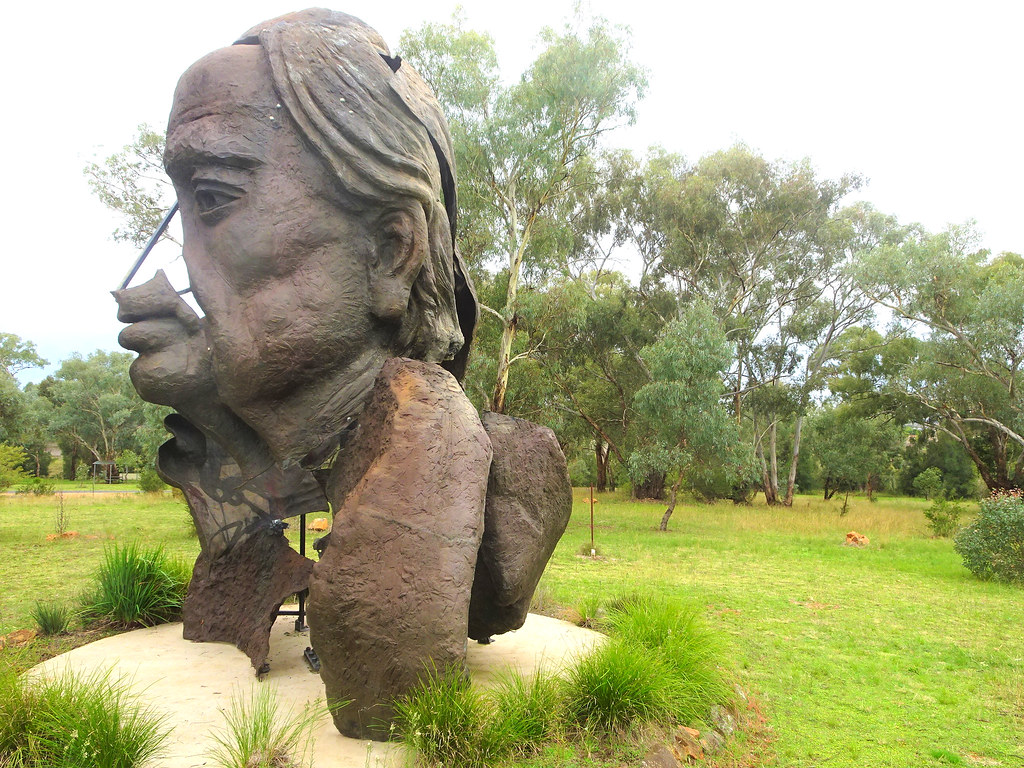
Sculptor Richard W. Rosen had already staked out studio space in the Pine Ridge Industrial Park when he noticed that several other artists had done the same, drawn there independently for identical practical reasons. In 2006, he gathered four of those studio owners and proposed something simple: pool their visibility. That initial conversation grew to 16 studios before the organization formally took shape, and the Naples Art District as it exists today - more than 100 professional artists strong - grew directly from that original cluster.
The industrial-park location was not accidental and was not a compromise. Commercial space on Fifth Avenue South and Third Street South - the traditional addresses for Naples galleries - carries rents calibrated for retail foot traffic. A working sculptor needs a high-bay unit with concrete floors, adequate ventilation, and room for equipment that no Fifth Avenue landlord would permit: kilns, forges, spray booths, stone-cutting tools, bronze-casting apparatus. Pine Ridge Industrial Park offered all of that at rents that did not require artists to sell at retail margins all day just to cover the space. The location looked industrial because it was industrial, and that was precisely the point.
Richard W. Rosen and Tracy Magen Rosen - sculptor and painter and mixed media artist, respectively - continue to operate Naples Art Studios within the district they helped organize. In 2020, fourteen years after that first conversation among five studio owners, Collier County officially designated the complex a Cultural Arts District - the county's formal recognition of what had grown from a grassroots idea into the largest concentration of working artist studios in Southwest Florida.
Getting Oriented: Three Streets, One Industrial Park
Studios are distributed across three addresses in Pine Ridge Industrial Park - Shirley Street, J&C Boulevard, and Yahl Street - all a short drive from Pine Ridge Road in North Naples. The physical layout is that of a working industrial complex: large bays, loading-dock doors, surface parking. What makes it navigable is that all three streets are close to each other, and the district provides both a printed catalog and a digital map showing every studio's location.
The Three Clusters
Each address has its own character, and treating them as interchangeable misses something:
- Shirley Street - the most publicly visible cluster and the focal point of the summer 'Meet the Artists' event series; many of the district's foundational and longest-tenured studios are concentrated here, making it a good place to start a first visit
- J&C Boulevard - worth walking the full length of the building rather than targeting a single unit; studios here reward browsing rather than a targeted approach
- Yahl Street - tends toward studios with larger equipment requirements; the artists who need the most square footage - for kilns, large-format casting, stone work - gravitate toward the units here
The district's own recommendation is to drive between clusters rather than walk, and that is the right call. Attempting to walk from Shirley Street to Yahl Street means crossing an industrial service road in Florida sun. Park near whichever cluster you want to start with, walk that building thoroughly, then drive to the next.
The Seasonal Calendar and the QR System
The core schedule is straightforward: Open Studios runs every Thursday and the second Saturday of each month, 1 to 5 pm, from November through April. Admission is free, no registration required, no ticket to collect. You show up and walk in. Over a full season that works out to roughly 30 open-studio days - a frequency that no equivalent program in the region approaches. Art After Dark, the district's monthly evening event on the first Wednesday of each month, offers an additional access window during the season. Annual studio tours happen once a year. Open Studios runs on Thursdays and the second Saturday of each month for five consecutive months.
Come once and you see a piece at one stage. Come back three weeks later on a Thursday and the same piece may be fired, patinated, stretched, or framed. The roughly 30 open-studio days in a full season are not 30 identical visits: they are 30 windows into work that keeps moving. No gallery or museum visit offers that.
During summer, from May through October, the district does not close - but availability becomes variable. A subset of artists maintain posted open hours year-round. Others take visits by appointment. The 'Meet the Artists of Shirley Street' summer event series exists specifically to maintain public access through the off-season months when casual walk-in traffic drops. Most coverage of the district implies it goes dark for seven months; that is wrong.
How the QR System Works
The real-time availability tool is the key to visiting in summer - and to knowing what is open on any given day during the regular season:
- Each studio has a QR code posted at or beside its entrance door
- Scan the code with your phone camera; it links directly to that studio's current-status page on the district's website
- The page shows whether the studio is open, closed, or appointment-only at that moment
- Alternatively, go to naplesartdistrict.com and use the 'Studios Open Now' live tool before you leave home - it shows real-time status for all studios on a single map
- If a studio shows appointment-only, contact information for the artist is typically listed on the same page so you can arrange a visit directly
The system removes the main barrier to visiting working studios: you no longer need to wonder whether anyone is home. Check the map before you drive.
| Access type | When available | Admission | Planning needed |
|---|---|---|---|
| Open Studios (season) | Nov-Apr, Thu & 2nd Sat, 1-5 pm | Free | None - walk in |
| Summer posted hours | May-Oct, varies by studio | Free | Check QR or live map first |
| By appointment | Year-round, artist-dependent | Free | Contact artist in advance |
| Shirley Street summer events | Select summer dates | Free | Check district calendar |
What You Will Actually Find Inside
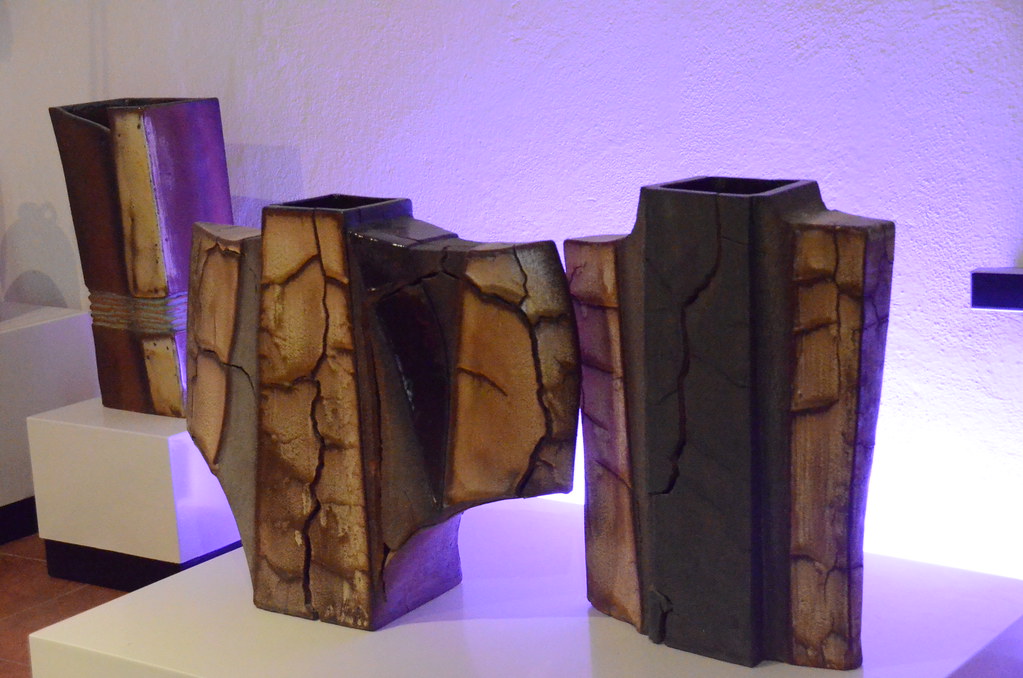
The word "studio" covers a wide range of physical environments here. A photographer's space may look relatively organized - backdrops, equipment racks, a print-drying area. A ceramicist's studio smells of slip clay, has shelves of unfired greenware in various stages of drying, and may have multiple wheels in active use. A bronze sculptor's space carries the weight of a small factory: molds in progress, casting equipment, finished pieces at every stage of patination. You are not looking at display; you are looking at production.
Mediums practiced across the more than 100 artists in the district include:
- Oil and acrylic painting
- Bronze casting and stone sculpture
- Wheel-thrown and hand-built ceramics
- Hot glass and mosaic
- Photography and digital printmaking
- Traditional printmaking - etching, lithography, screenprint
- Fiber arts and textile work
- Silversmithing and hand-fabricated jewelry
- Mixed media and installation
Sculptor John Zidek, one of the district's practitioners, illustrates how broadly a single artist's practice can run: his work spans bronze, wood, resin, ultraviolet minerals, and hand-fabricated gold and sterling silver jewelry. That cross-media range is typical rather than exceptional here. Many studios will surprise you with work that crosses categories you would not have expected to find side by side.
Studio Visit Etiquette: How to Be a Good Guest
An artist working in a studio during Open Studios has chosen to make themselves available, but they are still at work. The visit is not a retail transaction and not a performance. A few things make the difference between a visit that opens into a real conversation and one that flatlines.
Questions that tend to work well:
- "What stage is this piece at - how much further does it go before it is finished?"
- "How long have you been working in this medium?"
- "Is this part of a larger series or a standalone piece?"
- "What drew you to working in an industrial space rather than a traditional gallery setting?"
- "Do you take commissions, and if so, how does that process typically work?"
Things to avoid: touching work without asking, photographing pieces without a quick check (most artists are fine with it but asking takes two seconds and signals respect), and treating the studio as a showroom you are auditing while the artist watches. These spaces work best as conversations, not inspections.
Buying and Commissioning Directly From Artists
Buying a finished piece from a studio is simpler than many visitors expect. There is no gallery markup, no intermediary, and no waiting for a third party to forward payment. You are dealing directly with the maker. For a sale of a finished work, the conversation covers price, transport or shipping if the piece is large, and payment method - most district artists accept cards, but confirming is worth the question.
Commissioning original work is a different and more involved process. A typical commission sequence runs as follows:
- Discuss the piece - dimensions, materials, subject, and timeline - with the artist during a studio visit or a follow-up meeting
- Review any sketches, maquettes (small-scale models), or material samples the artist proposes before committing to the full commission
- Agree on a deposit - typically a percentage paid upfront to cover materials and begin work; the artist will specify their standard terms
- Receive progress updates according to whatever schedule you and the artist agree on; some artists build in in-person check-ins for large or complex pieces
- Pay the balance on completion, before delivery or transport
Timelines vary considerably by medium. A ceramic piece requires multiple firings across weeks. A bronze sculpture involves lost-wax casting and foundry time that the artist does not fully control - build in extra buffer here. Fiber and textile commissions often move faster but depend on whether custom materials need sourcing. Ask directly about timeline; artists are accustomed to the question. What you gain by commissioning through a studio rather than through a gallery is direct contact with the maker at every stage. Problems are solved in conversation. Changes to the brief are discussed face to face. And you know exactly where the piece came from and how it was made, because you watched part of it happen.
Building a Full Naples Art Day Around the District
The district occupies a distinct position in Naples' art geography - artist-led and production-focused in the north, while the city's institutional and commercial options anchor the south. A well-sequenced art day uses that geography rather than fighting it.
Start at the district when Open Studios begins at 1 pm. Naples heat in the morning is a practical deterrent anyway, and studios tend to be more energized early in the afternoon window. Spend two to three hours moving between the three clusters. Then drive south on Goodlette-Frank Road to the Baker Museum at Artis-Naples, a short drive from the industrial park. The Baker holds a permanent collection of more than 3,500 objects of 20th- and 21st-century art and runs several traveling exhibitions annually - verify current collection and exhibition details at artisnaples.org, as the collection continues to grow. The institutional scale provides a useful counterpoint to the studio environment you just left. If energy remains, the Fifth Avenue South and Third Street South gallery strips are close to Artis-Naples and come alive in the early evening.
One practical note on sequencing: starting at the district rather than ending there changes how you read the other venues. A finished piece under museum lighting or behind a gallery price tag carries different weight after you have spent an afternoon watching someone work the material it is made from.
Practical Logistics: Parking, Timing, and What to Bring
Parking at Pine Ridge Industrial Park is surface lots in front of each building - generally plentiful and free. The challenge is not finding a spot but knowing which lot serves the cluster you want first. Download or screenshot the digital map from naplesartdistrict.com before you arrive rather than navigating on a small screen in a parking lot. During the November through April season, complimentary printed catalogs listing all participating studios are available at each open location - grab one at the first studio you enter and use it as a physical reference for the rest of the visit.
What to bring and plan for:
- Comfortable shoes - studio floors are concrete, often uneven, and you will be on your feet for two or more hours
- Water - there are no cafes or vending options inside the industrial park itself
- A charged phone for the QR code system and live availability map
- A small notebook if you are serious about commissions - jotting dimensions, artist names, and timeline notes during the visit saves confusion later
- Cash as backup, though most artists accept card payments
Best arrival time during the regular season is early in the 1 to 5 pm window - not because studios close early, but because artists who are genuinely at work are typically more engaged and conversational at the start of the afternoon than at the end. In summer, run the live map check on naplesartdistrict.com first thing that morning and confirm which studios are open before driving out to the park.
Frequently Asked Questions
Do I need to buy something to visit a studio?
No. Open Studios is free and there is no purchase expectation. Artists make their studios available because they want public engagement with their work, not because they need walk-in sales on a particular afternoon. Browse, ask questions, and leave with only a printed catalog if that is all you wanted - that is a valid visit.
Is the Naples Art District connected to the galleries on Fifth Avenue South?
No - they are separate operations with different models. Fifth Avenue South galleries are commercial venues representing artists and selling finished work; any commission involves the gallery as intermediary. The Naples Art District's studios are independent production spaces where you work directly with the artist, with no intermediary involved. The Baker Museum at Artis-Naples is a third distinct model: a nonprofit institutional museum, not a sales venue, which makes all three worth visiting for different reasons.