Southwest Florida has a wood art scene that doesn't fit the typical gallery-district mold. The subtropical climate gives artists a raw-material advantage no northern woodturner can replicate: bald cypress, mango, live oak, and other native species appear in workshops weeks after storm season ends, already shaped by weather and time. That material reality, combined with a club founded in Fort Myers in 1998 and a competitive expo running since 1986, has built a community substantial enough to draw serious collectors during the January art season. What follows is a discipline-by-discipline guide to that community - where the work comes from, who makes it, and where you can find it across the region from Fort Myers to Sanibel and Captiva to Naples.
Five Disciplines, Five Different Objects
Collectors and visitors often arrive at wood art with a vague category in mind. The differences between disciplines affect everything from the tools used to the price point to the way a finished piece ages. Treating them as interchangeable misses what makes each one worth pursuing.
| Discipline | Primary Tool | Typical Output | Shown at SWFL Expo |
|---|---|---|---|
| Woodturning | Lathe | Bowls, vessels, platters | Yes - dedicated track |
| Wood carving | Gouges, chisels | Figures, reliefs, scenes | Yes - dedicated track |
| Chainsaw carving | Chainsaw, angle grinder | Large sculptural forms | Yes - standalone category |
| Pyrography | Burning pen | Burned images on flat or turned surfaces | Classified under carving as etchings |
| Constructed forms | Mixed | Assemblage, inlay, marquetry, furniture | Furniture division added recently |
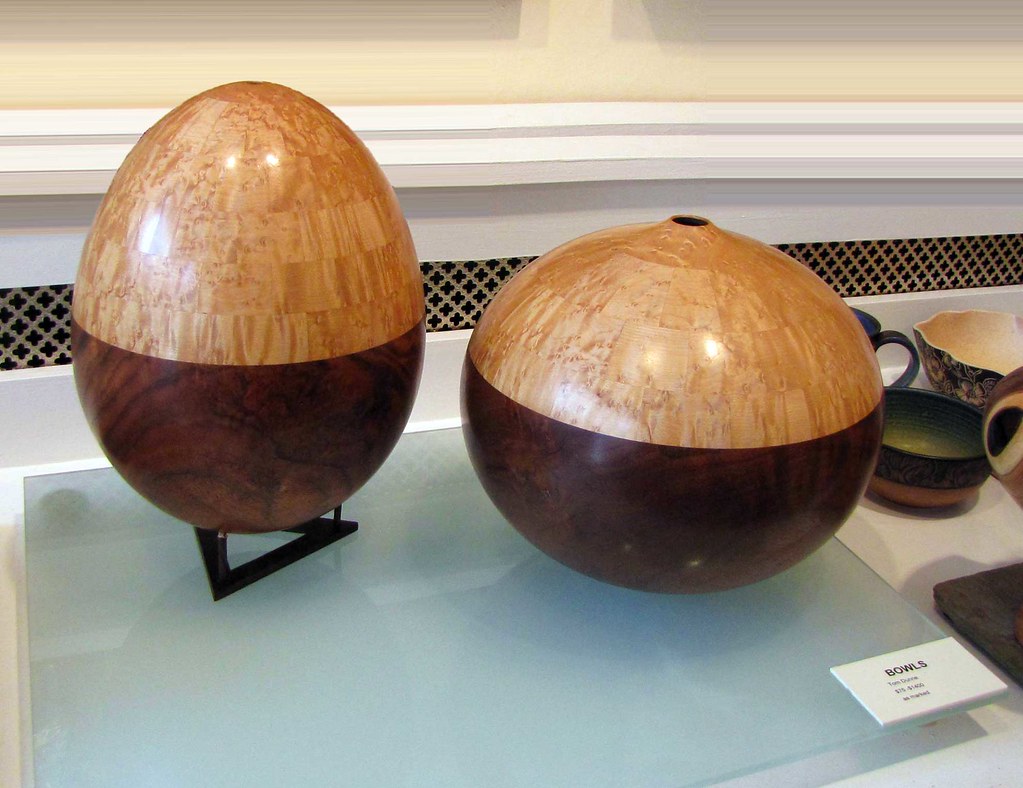
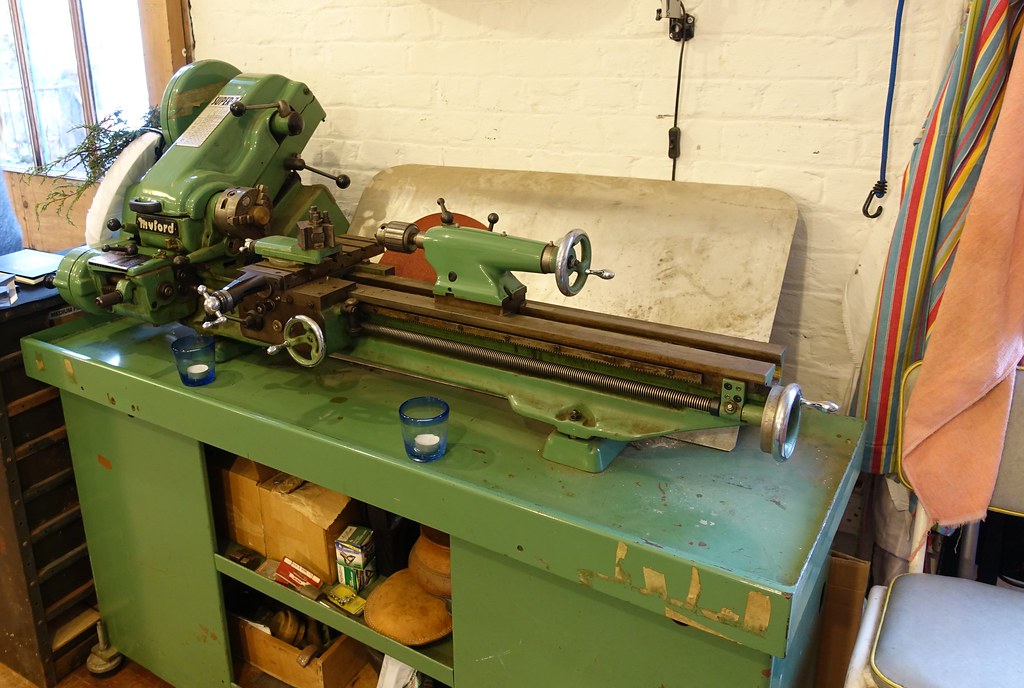
Woodturning is lathe work: a blank of wood spins on an axis while the artist removes material with a gouge. The result is always radially symmetric - bowls, platters, hollow vessels, miniatures. What varies enormously is the relationship between the turner and the grain. A skilled turner reads the wood's figure and orients the blank to catch it in the finished form. SWFL turners work both green (freshly cut) and dried blanks; green wood moves as it dries, producing organic distortions that some artists treat as a feature rather than a flaw.
Wood carving covers a wide range - from small caricature figures to large 3D scenes - and relies on hand tools: gouges, chisels, V-tools, knives. The carver removes material by hand rather than by rotation, so finished work can be asymmetric, narrative, and highly detailed. Regional carvers show in categories including lifelike animals, holiday displays, flatwork, and impressionistic depictions at the annual expo.
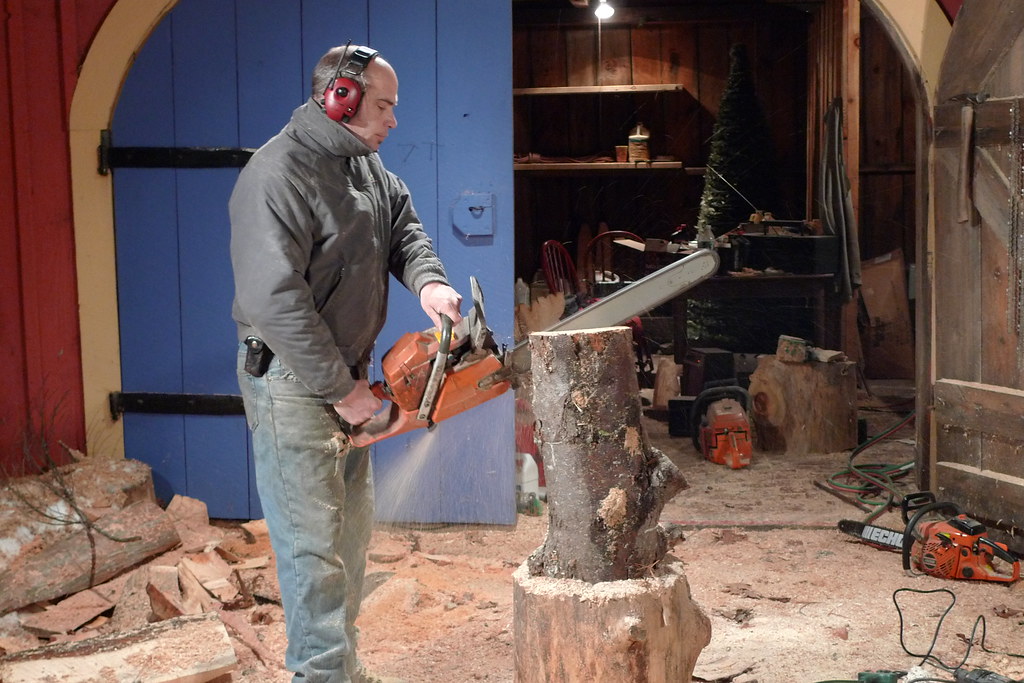
Chainsaw carving is sculpture at speed and scale. A chainsaw artist produces work that can stand several feet tall from a single log in a matter of hours. The category draws audiences at live demonstrations because the process is dramatic - chips flying, loud machinery, forms emerging in real time from solid timber. The SWFL Wood Art Expo now runs it as a standalone competition category, distinct from hand carving.
Pyrography - drawing with heat - sits at the intersection of turning and carving. A burning pen marks the wood surface to produce fine-line images, shaded portraits, or bold graphic patterns. It appears on both flat panels and turned vessel surfaces, and can be combined with carving or paint. In the expo's competition structure it is classified under wood carving as etchings.
Constructed forms is the broadest category: driftwood assemblage, intarsia (shaped wood pieces fitted together like mosaic tiles), marquetry (thin veneers laid in patterns), and furniture. The Naples Art District includes practitioners of all four modes. A driftwood assemblage might incorporate storm-collected branches alongside bronze or glass; a piece of marquetry furniture might feature a dozen species in a single tabletop.
The Wood Itself - A Hyperlocal Palette
The subtropical climate that makes Southwest Florida humid enough to threaten glue joints over time simultaneously delivers a raw-material palette no temperate woodshop can access. Regional artists work with native and locally available species including:
- Bald cypress - rot-resistant, fine-grained, historically prized for outdoor work; now available mainly from salvaged or storm-downed trees
- Live oak - dense, interlocking grain that resists splitting and produces dramatic figure when turned or carved
- Mango - fast-growing, abundant in residential yards, with orange and pink-streaked grain that turns brilliantly
- Loquat - small-diameter but dense, used primarily for turned pieces and small carvings
- Pecan - open-grained, light-colored, with visible ray structure favored in segmented turning
- Camphor - aromatic, consistently figured, falls frequently in storms and goes directly into regional workshops
- Norfolk Island pine - an ornamental tree common in SWFL landscapes that produces distinctive knotty figure when turned
Many of these blanks come from arborists and tree services operating after hurricane season. A turner with a standing relationship with a local tree service can source unusual figured material - camphor crotch, mango burl - that never enters commercial lumber markets. Woodworkers in the Naples area also work with imported exotics: rosewood, padauk, Australian lacewood, and sassafras appear in furniture and decorative work alongside native material, purchased through specialty suppliers and offering more consistent availability than storm-dependent sourcing.
The Woodturners of Southwest Florida
The organizing center of the region's turning community is the Woodturners of Southwest Florida, founded in Fort Myers in 1998. The club's geographic footprint covers Naples, Bonita Springs, Estero, Cape Coral, Fort Myers, North Fort Myers, and Lehigh Acres - essentially the full urban corridor of Lee and Collier counties.
Two features distinguish this club from a typical hobbyist group. First, it maintains a fully equipped woodturning shop in downtown Fort Myers that members can book for independent studio time on a scheduled basis separate from the regular monthly meetings - check with the club directly for current booking details. This means working artists have access to production-grade equipment without the cost of outfitting a private shop. Second, the club has a documented record of public outreach: officers have led introductory demonstrations at the Alliance for the Arts in Fort Myers open to the public - verify any current age or registration requirements directly with the Alliance.
The membership spans serious studio practice and recreational turning. Officers include working artists who show in commercial galleries - Oliver Martin, a club officer, shows woodworking at Hirdie Girdie Art Gallery on Sanibel; fellow member Kay Stammers shows wood carving there as well. That direct line from club meeting to gallery wall is part of what makes the organization useful to a visiting collector or student trying to understand the regional scene.
The SW Florida Wood Art Expo - A Visitor's Guide
No event in the region - and very few in the state - puts all the wood-art disciplines in one room. The SW Florida Wood Art Expo has done exactly that since 1986. The January 2026 edition at the Charlotte Harbor Event and Conference Center in Punta Gorda was the 40th annual installment, which makes it one of the longest-running wood-art competitions in Florida. The show falls inside the SWFL art season, typically on a weekend in early January - check the expo's official listing each fall for the confirmed date.
Competition Structure
Entries are judged across two main tracks. The woodturning track includes bowls and platters, open and closed segmented vessels, miniatures, multi-media and cast elements, utility and kitchen items, and artistic exploration. The wood carving track covers:
- 3D scenes and still-life
- Lifelike animals
- Caricature and montage
- Etchings (pyrography)
- Flatwork
- Holiday displays
- Impressionistic depictions
- Miniatures
Recent editions added chainsaw carving, CNC carving, and laser carving as standalone categories, along with a new furniture division. Awards include Best of Show, President's Choice, People's Choice, and first through third place across every category and skill level - competition runs from novice to professional within each division, so the floor shows both beginner and master work.
What to Expect on the Floor
The expo's live-demonstration program is one of the few public venues in Florida where woodturning, hand carving, and chainsaw carving happen side by side. Professional demonstrators work in real time while visitors circulate. A first-time visitor should plan to arrive early enough to watch a chainsaw demonstration from the start - the transformation from log to sculpture is the clearest possible introduction to what scale and speed mean in that discipline. Vendors sell tools, finishing supplies, wood blanks, and finished work alongside the competition entries. Talking directly to vendors is productive for anyone wanting to understand regional material sourcing or find a supplier for specific species.
The expo's four-decade record and its side-by-side demonstration format make it the single most useful day a collector or prospective student can spend with wood art in Southwest Florida - every discipline, live, in one building.
Where to See and Buy Across the Region
Finished wood work appears at several distinct points across the region, each with a different curatorial character.
On Sanibel, two cooperative galleries carry wood alongside other mediums. Hirdie Girdie Art Gallery includes work by Oliver Martin and Kay Stammers, both Woodturners of Southwest Florida members - which means the work there connects directly to the club community and its shared material knowledge. Tower Gallery, housed in a 1915 Florida cottage and run as a cooperative of 23 artists since 1982, includes wood alongside oil, acrylic, ceramic, jewelry, and fiber work.
On Captiva, Jungle Drums Gallery - operating since 1989 - presents wildlife and coastal art in wood, bronze, copper, glass, and clay. The range runs from lathe-turned vessels to large bronze sculpture, with wood work positioned within a broader wildlife and natural-world context. This is a gallery where a turned mango bowl sits near a life-size bronze heron, which says something useful about its collector base.
The Naples Art District, off Pine Ridge Road, includes more than 100 artists working across mediums. Wood practitioners there cover all four main disciplines: carving and engraving, pyrography, lathe turning, and constructed forms including driftwood assemblage, inlay, and marquetry. Because these are working studios rather than standard retail galleries, the access model differs - open studio events and scheduled visits rather than walk-in browsing. Check the district's event calendar for open studio dates during the art season.
In Fort Myers, the DAAS CO-OP Art Gallery - open since April 2016 with more than 25 member artists - is located at the Alliance for the Arts campus on McGregor Boulevard and holds guest artist receptions on the first Friday of each month, presenting sculpture and mixed-media work that includes wood. The Alliance for the Arts campus is primarily a performance and community arts venue rather than a retail gallery, but its woodturning demonstrations function as genuine introductions to the artists and the work.
Learning the Craft in Southwest Florida
Public access to wood art instruction in SWFL runs on two parallel tracks: watch first, then make. The Alliance for the Arts demonstrations led by Woodturners of Southwest Florida officers are open to the public - verify any current age or registration requirements directly with the Alliance before attending. These introductory sessions cover what a lathe does in operation - they answer the questions a first-time visitor would have before committing to a class.
For actual hands-on time, the club is the practical route. Here is how a newcomer or visiting artist typically engages:
- Attend a monthly club meeting as a prospective member - this establishes whether the club's focus and community fit your goals without any commitment.
- Confirm membership requirements and current dues directly with club officers at the meeting or through the club's contact channels.
- Once a member, book time in the club's shop in downtown Fort Myers according to the club's current schedule - this is where hands-on lathe access with professional-grade equipment happens.
- Pair shop time with monthly meeting attendance to access critique and the informal instruction that happens around experienced members' demonstrations.
For carving specifically, the expo demonstration floor is itself a form of access. Spending time watching a professional hand-carver or chainsaw artist at work - seeing exactly where the tool contacts the material and why - is instructional in a way a short class often cannot replicate.
What Collectors Should Know
Reading grain and finish in turned work: A well-turned bowl shows continuous grain running through the wall from rim to foot. Hold a bowl up to a light source and check for wall thickness consistency - thin spots indicate either intentional design or uneven technique, and the maker should be able to tell you which. Finish should be even under raking light, with no cloudy patches indicating moisture trapped under a sealed surface. Ask whether the piece was turned green or dry; green-turned pieces that cracked and were repaired carry less value than solid ones.
Carving versus chainsaw carving for value: Hand carving is typically more labor-intensive per square inch than chainsaw work - a tightly detailed hand-carved figure often represents more hours than a large chainsaw sculpture many times its size. Chainsaw work is valued partly for scale and drama; hand carving for precision and detail. The two don't directly compete on price - they occupy different collector conversations and shouldn't be compared on size alone.
Species documentation: For any piece sold as a native Florida species, a reputable maker can tell you the source - salvage, arborist material, or personal harvest. Species claims that cannot be sourced warrant skepticism, particularly for mahogany. Turners who work with storm-sourced material generally know exactly which tree a blank came from, sometimes down to the neighborhood.
Commissioning directly: Several club members show in galleries but also accept commissions. Working directly with an artist from a specific local species - commissioning a turned vessel from a camphor tree removed from your own yard, for example - is a realistic option in this market. Gallery artists and club officers are the starting contacts; the expo is another productive moment to raise the conversation.
Frequently Asked Questions
When does the SW Florida Wood Art Expo take place each year?
The expo runs annually on a weekend in early January at the Charlotte Harbor Event and Conference Center in Punta Gorda. The 2026 edition was the 40th annual show. The specific weekend varies year to year, so check the expo's official listing each fall for confirmed dates - the show is reliably within the January art season window.
Do I need prior woodworking experience to join the Woodturners of Southwest Florida?
No prior experience is required to attend a club meeting as a prospective member. The club includes members at all skill levels, from hobbyists trying a lathe for the first time to professional artists who show in commercial galleries. Attending a monthly meeting is the standard first step, and it carries no commitment.
What native Florida wood species do SWFL artists actually use most?
Mango, camphor, and live oak appear most frequently in regional workshops because all three are abundant in residential and commercial landscapes and fall regularly in storms - meaning supply is local and often free. Bald cypress and Norfolk Island pine are also common. Turners with arborist connections can access unusual figured material like camphor crotch that never reaches commercial suppliers.
Can visitors buy finished work at the Wood Art Expo, or is it competition only?
The expo includes vendors selling finished work alongside the competition entries, so purchasing on-site is possible. Individual competition exhibitors may also sell their pieces; asking directly at each display is the practical approach since policies vary by artist.
Which gallery is the best starting point for seeing wood art on the islands?
That depends on what you want. Hirdie Girdie on Sanibel shows work by club members - a woodturner and a carver - so it connects directly to the organized regional community and the material knowledge behind the work. Jungle Drums on Captiva shows wood in a wildlife and coastal context with a wider range of scale, from small turned pieces to large sculpture. Tower Gallery on Sanibel is the broadest co-op and shows wood alongside many other mediums, which suits a visitor who hasn't decided what they are looking for yet.
Where does chainsaw carving appear for sale outside of the expo?
Large chainsaw work moves mostly through outdoor events and direct studio sales because the physical scale of the pieces - some standing several feet tall - makes standard gallery display impractical. The SWFL Wood Art Expo is one of the few venues in the state where competition-level chainsaw carving appears alongside gallery-appropriate turning and hand carving under one roof. For purchasing, the direct-from-artist route is most practical; expo demonstrators and the Woodturners of Southwest Florida are reasonable starting points for finding active carvers in the region.