Southwest Florida holds an unusual concentration of marine art resources - a gallery with roots going back to 1968, a fishing culture that reaches back to the Calusa Empire, and a working community of painters whose subjects swim in the same water their buyers look at from their lanais. No single guide has connected these pieces before. This one does.
Why Southwest Florida Sustains a Marine Art Market
Three forces keep marine art commercially alive here: the region's fishing identity, its seasonal collector base, and the visual insistence of the coastline itself.
Charlotte Harbor was the center of the Calusa Empire - an aquatic culture that built its entire civilization around the sea, giving Southwest Florida one of the longest continuous marine traditions in North America. That dependence on the water runs unbroken into the present. Boca Grande Pass in Lee County carries the widely used designation as the Tarpon Fishing Capital of the World, a reputation solid enough that by the early 1910s - after the Hotel Boca Grande opened on the island in 1911 - industrialists J.P. Morgan, Henry du Pont, and Harvey Firestone were making regular pilgrimages there specifically for the tarpon. The pass shaped a social identity around big-game fish that persists today in local architecture, restaurant decor, and collecting patterns.
The snowbird collector base amplifies that identity. Buyers who winter in Naples, Bonita Springs, and Fort Myers bring purchasing habits formed in northern cities - where auction houses, established galleries, and collector networks are familiar - and then spend their leisure time on or near the water. Marine art fits their experience in Southwest Florida in a way that abstract or figurative work often does not.
The coastline does its own persuading. The Gulf's shallow water and particular light conditions - the flat midday glare, the copper late-afternoon reflections across the flats - appear in the work of every painter who has spent real time here. The landscape is not incidental to marine art in this region; it is the subject.
Marine Arts Gallery in Bonita Springs
Marine Arts Gallery describes itself as the oldest gallery in the United States dedicated to marine ship paintings. That claim rests on a founding date of 1968, when Russell and Donald Kiernan opened the gallery in Salem, Massachusetts - a city whose identity is bound up with maritime history and the sea trade. The gallery operated in Salem for more than fifty years before the Kiernans relocated to The Promenade at Bonita Bay in Bonita Springs in the summer of 2019.
The move was not arbitrary. Southwest Florida's collector base and the gallery's existing client relationships made it a logical destination. What arrived in Bonita Springs was not a regional gallery with local inventory but a specialist operation with national scope and a historical collection that most American cities have never seen under one roof.
What the Gallery Actually Stocks
The inventory spans several centuries and two continents. On the historical side, the gallery carries works by painters whose names define the field:
- Antonio Jacobsen (1850-1921), who painted more than 6,000 ship portraits over his career and is considered the most prolific marine artist on record - his subjects ranged from working steamships to racing yachts, and significant examples have sold at major auction houses for six-figure sums
- James Edward Buttersworth (1817-1894), who documented America's Cup races and whose auction record for a single racing scene reflects the strong demand his work commands among serious collectors
- Montague Dawson (1890-1973), regarded as one of the leading nautical painters of the 20th century, known for dramatic sail compositions and precise vessel detail
- Emile Gruppe (1896-1978), a New England plein air painter whose harbor and marine subjects bridge the gap between the formal ship-portrait tradition and the looser American impressionist approach
On the contemporary side, the gallery represented Roy Cross RSMA, who was elected to the Royal Society of Marine Artists in 1977 and built a reputation over decades for exceptional historical accuracy in his vessel paintings. Cross died in April 2024 at age 100, which makes the gallery's holdings of his work particularly significant. Terry Bailey RSMA and Richard Loud ASMA are among the living artists also represented.
Historical Ship Portraits as a Collector Category
Buying a Buttersworth or a Jacobsen is a different transaction from buying a contemporary painting, and collectors who approach it without understanding that difference make costly errors. The historical ship-portrait market has its own price logic, condition standards, and authenticity concerns.
What Drives Prices
Subject matter matters enormously. A Buttersworth depicting an America's Cup race commands significantly more than one showing a commercial vessel, because the racing history is documented, the boats are identifiable, and the pool of potential buyers is larger. For Jacobsen, whether a ship's identity can be confirmed against historical records affects value directly. Known vessels with documented histories outperform anonymous ships even when the painting quality is comparable.
Provenance - the ownership chain from the artist's hand to the present - adds value and reduces authentication risk. A work that has appeared in a major auction house catalogue, with that catalogue as documentation, carries more credibility than one surfacing without a paper trail. Montague Dawson's dramatic sail compositions, for instance, appear regularly in documented auction records, which makes pricing comparables relatively accessible.
Condition and Authenticity Checks
Marine paintings face particular conservation challenges. Salt air, humidity, and strong light have affected works that spent time in coastal homes, and a painting that looks intact under indoor lighting may show significant deterioration under ultraviolet examination. Before purchasing any historical work, ask the gallery for condition reports and information about past conservation treatments. A reputable specialist gallery will have this documentation or will obtain it.
Authentication for major names like Buttersworth and Jacobsen involves comparison with catalogue raisonnés - the scholarly compilations of an artist's known work. Marine Arts Gallery's depth in this category means their staff can provide context that a generalist auction house often cannot, but independent appraisal from a conservator familiar with 19th-century American marine painting is worth arranging for any significant purchase.
RSMA and ASMA Credentials: What the Initials Mean
Two organizations credential serious marine painters, and their initials appear regularly in gallery listings and artist biographies. Understanding what they represent lets buyers evaluate an artist's standing without relying entirely on a gallery's word.
The Royal Society of Marine Artists (RSMA) is a UK-based organization founded in 1939 with a long history of juried membership. Election to full membership requires submitting work to the society's annual exhibition and gaining approval from existing members. The process is competitive, and the initials RSMA after an artist's name indicate that working professional marine painters have assessed the work and found it meets the society's standard. Roy Cross's election in 1977 and Terry Bailey's current standing at Marine Arts Gallery both carry that weight.
The American Society of Marine Artists (ASMA) performs a comparable function in the United States. Founded in 1978, it awards Signature and Fellow designations through a juried process held each spring. Richard Loud's ASMA designation indicates juried acceptance by the American body. The two societies are separate organizations with their own membership processes, but both serve the same purpose for buyers: they represent a peer-reviewed credential in a field where self-described expertise is otherwise hard to verify.
The initials RSMA and ASMA after a marine painter's name are not honorary titles - they are the result of submitting work to a jury of professional peers. For a buyer evaluating contemporary marine art without deep subject knowledge, those initials are the most reliable independent reference point available.
Local Artists Rooted in the Region
Three artists working in or closely connected to Southwest Florida have developed approaches specific to this place rather than generic coastal painting.
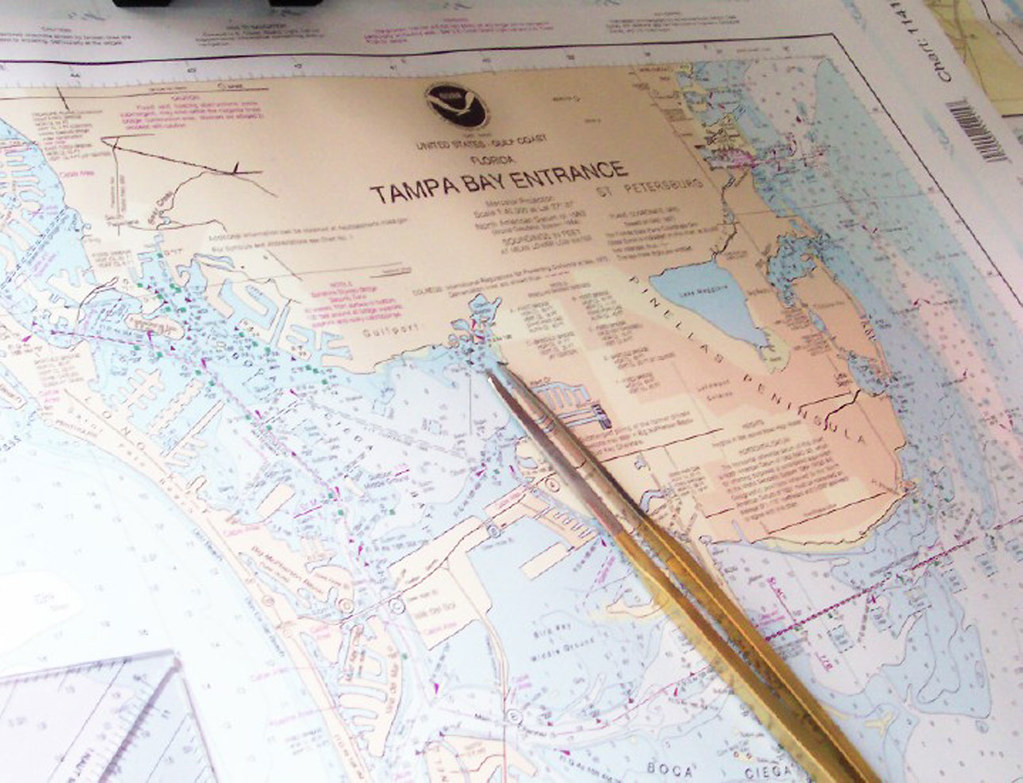
Steve Whitlock was raised in Naples and worked as an inshore fishing guide around Naples and the Everglades before earning a BFA in Illustration from Ringling College of Art and Design in 1998. His paintings of game fish - tarpon, snook, redfish - are rendered directly onto actual navigational charts of the Florida coast. The format is specific and local in a way that reproductions cannot replicate: the chart beneath the image is the same chart a guide might use to run the same water the painted fish inhabits. No other regional artist has developed this approach, and it has not been documented elsewhere as a recognized regional medium. Each piece is inseparable from its underlying chart, which means the original and a print are fundamentally different objects.
Brendan Coudal is a Southwest Florida oil painter whose style draws from retro illustration - the kind of graphic, high-contrast imagery associated with mid-20th-century travel posters and sporting prints. His tarpon, mermaid, and coastal scenes read as both contemporary objects and deliberate nods to the visual culture of the region's earlier tourist economy. The work collects well here because it speaks to locals and visitors alike who carry a personal connection to the coast.
Carey Chen, a South Florida resident and self-taught painter, is regarded internationally as one of the foremost fish-art painters working today. His subjects include tarpon and hammerhead scenes recognizable to anyone who has worked or fished the backcountry near the Everglades. His reach extends well beyond Southwest Florida, but his paintings connect directly to the species and environments this region is known for.
Tarpon and Fish Art as a Distinct Tradition
Game-fish painting is not simply wildlife art applied to marine subjects. The distinction matters for collectors because the market, the buyers, and the pricing logic differ.
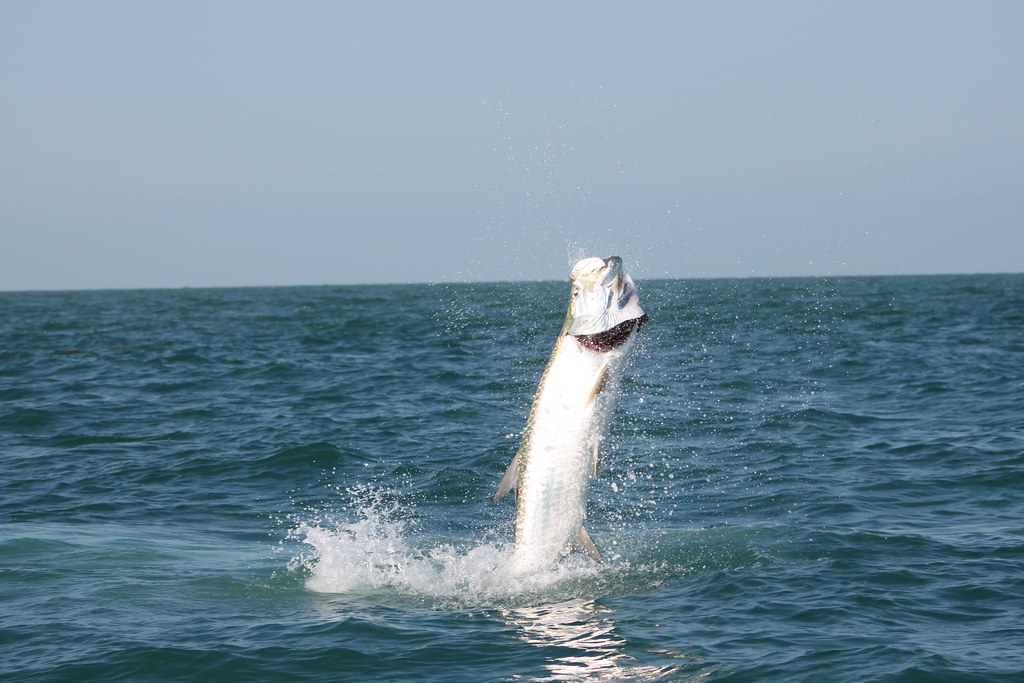
Wildlife art tends toward natural history - accurate representation of animal behavior in habitat, often for conservation-minded buyers. Fish art, particularly the game-fish painting tradition centered on tarpon, snook, and redfish in Southwest Florida, is rooted in sporting culture. A tarpon painting sold near Boca Grande Pass is not selling to someone who appreciates fish biology in the abstract; it is selling to someone who has fought a tarpon on the end of a line, or aspires to, or is embedded in the culture surrounding it.
Boca Grande Pass concentrates this dynamic. Its reputation as the Tarpon Fishing Capital of the World draws anglers who are willing to spend on equipment, guides, and experiences - and that spending disposition extends to art. The collector identity that formed there has sustained a regional market for fish art for more than a century. Charlotte Harbor's Calusa history adds further depth: this is a coastline where human relationships with marine species go back further than any colonial-era settlement.
What separates quality game-fish painting from generic coastal decoration:
- Species accuracy - a painter who fishes knows how a tarpon carries itself in the water; one who does not usually reveals it in the posture and scale relationship between fish and habitat
- Habitat specificity - the water color, light conditions, and vegetation in the background should be recognizable to anyone familiar with the actual locations depicted
- Action credibility - the moment chosen (a jump, a strike, a tail-walk) should reflect real observed behavior, not a generalized impression of excitement
- Local reference - the best regional fish-art painters work from direct experience, and that familiarity shows in details that a non-fishing visitor would not think to include
Other Places to Find Marine Art in Southwest Florida
Marine Arts Gallery is the region's specialist anchor, but it is not the only place marine work surfaces.
- Coastal Outfitters at Port Sanibel Marina - located in Fort Myers near the Sanibel Causeway, this retailer integrates original marine art into a working marina environment alongside luxury outdoor gear; the combination is unusual, and the setting attracts buyers who might not walk into a dedicated gallery but who are already spending on the coastal lifestyle
- Outdoor art festivals - Naples, Fort Myers, and Sarasota host major festivals seasonally that bring regional and national marine artists to the area; quality varies widely at festival booths, and the single-weekend sale format makes careful evaluation harder, but festivals are an efficient way to see a range of work and meet painters directly
- Seasonal appearances at generalist galleries - galleries throughout the region carry marine work from October through April when the snowbird population is present; these tend to feature regional artists rather than historically significant names, but individual discoveries are possible for collectors willing to look
Buying Marine Art Here: A Practical Sequence
Whether the goal is a historical ship portrait or a chart painting by a local artist, the purchasing process follows a similar sequence of due-diligence steps.
- Establish the category first - historical original, contemporary original, or limited-edition reproduction - before evaluating the work on any other basis, since the price logic, collectibility, and care requirements differ significantly across those three types.
- Verify credentials for contemporary work by checking whether the artist holds RSMA or ASMA designation; ask about exhibition history and whether the work has been included in any documented survey of marine art beyond the gallery's own wall.
- Request provenance documentation for historical works - auction catalogue appearances, exhibition records, and prior ownership history all reduce authentication risk and support future resale value.
- Ask for a condition report for any work of significant age or for any painting that has spent time in a coastal environment; request written information about past conservation treatments and current condition under examination.
- Plan the framing before purchase - coastal humidity requires UV-filtering glazing, materials that allow the canvas or panel to breathe, and placement away from exterior walls and air-conditioning vents; factor this cost into the total purchase budget before committing.
- Confirm return and resale policies - a gallery confident in its inventory will provide clear terms; knowing them before the purchase matters more for historical works than for contemporary originals.
Comparing the Four Market Categories
| Category | Subject focus | Price tier | Key credential to check | Primary conservation concern |
|---|---|---|---|---|
| Historical ship portraits | Sail and steam vessels, racing scenes | Highest | Auction provenance, catalogue raisonné entry | Canvas stability, prior restoration work |
| Contemporary marine originals | Vessels, coastal scenes, historical reconstructions | Mid to high | RSMA or ASMA designation, exhibition history | UV exposure, humidity fluctuation |
| Regional game-fish originals | Tarpon, snook, redfish, Gulf species | Mid range | Artist biography, direct regional experience | UV exposure, coastal environment |
| Limited-edition giclees | Any marine subject | Lower | Edition size, certificate of authenticity | Ink and paper fading over time |
Frequently Asked Questions
Is Marine Arts Gallery open year-round or only seasonally?
The gallery relocated from Salem, Massachusetts to The Promenade at Bonita Bay in Bonita Springs in summer 2019 and operates as a permanent location rather than a seasonal operation. Hours can shift, particularly during the slower summer months, so it is worth contacting the gallery before making a dedicated visit.
How much do historical marine paintings by Buttersworth or Jacobsen sell for?
Prices depend on subject, size, condition, and provenance and can vary considerably even within a single artist's output - significant examples by both painters have reached six figures at major auction houses. For current market comparables, check recent realized prices at Sotheby's, Christie's, and Doyle; the gallery can also provide pricing directly on works in their inventory, which reflects the current market rather than any fixed schedule.
Where can I find Steve Whitlock's navigational-chart paintings in Southwest Florida?
Whitlock's chart paintings are specific to him as a regional artist, and the best starting point is contacting him directly or following his exhibition appearances in the Naples and Southwest Florida area. Coastal Outfitters at Port Sanibel Marina in Fort Myers also carries his work. Because the painting and the underlying navigational chart are inseparable, each original is a single unique object - a print of his work does not carry the same meaning or the same connection to place that the original does.
Do RSMA and ASMA memberships guarantee quality, or are they just administrative credentials?
Neither organization confers membership automatically - both require submission of work to a jury of practicing marine painters, which means the credential reflects a peer assessment of technical ability and subject knowledge at the time of election. It does not guarantee that every subsequent work by that artist will meet the same standard, but it establishes a professional baseline that self-applied labels cannot. For buyers without deep expertise, those initials are a meaningful starting point for comparison.
What is the difference between buying fish art at a marina shop versus a gallery?
A marina retail environment like Coastal Outfitters at Port Sanibel Marina typically stocks work by regional artists at accessible price points, with less documentation of provenance or exhibition history than a specialist gallery provides. That does not make the work less appealing - the setting often surfaces artists directly connected to the local fishing community - but it does mean the buyer carries more responsibility for due diligence. Ask the same questions you would ask anywhere: original or reproduction, artist background, framing materials used.
Can I hang a valuable marine painting in a Florida room or sunroom?
A sunroom or Florida room typically receives direct sunlight and experiences greater temperature and humidity swings than an interior space, both of which accelerate deterioration in oil paintings and works on paper. For any work of significant value, an interior wall away from direct sun and exterior doors is the safer placement. UV-filtering window film on adjacent glass and a dehumidifier in the room can help, but consult a conservator before installation if the work has historical significance.